
Magzter GOLDで無制限に
10,000以上の雑誌、新聞、プレミアム記事に無制限にアクセスできます。
Visit Plane Earth 2125
How It Works UK
|Issue 198
How might our world have transformed under the strain of climate change 100 years from now?
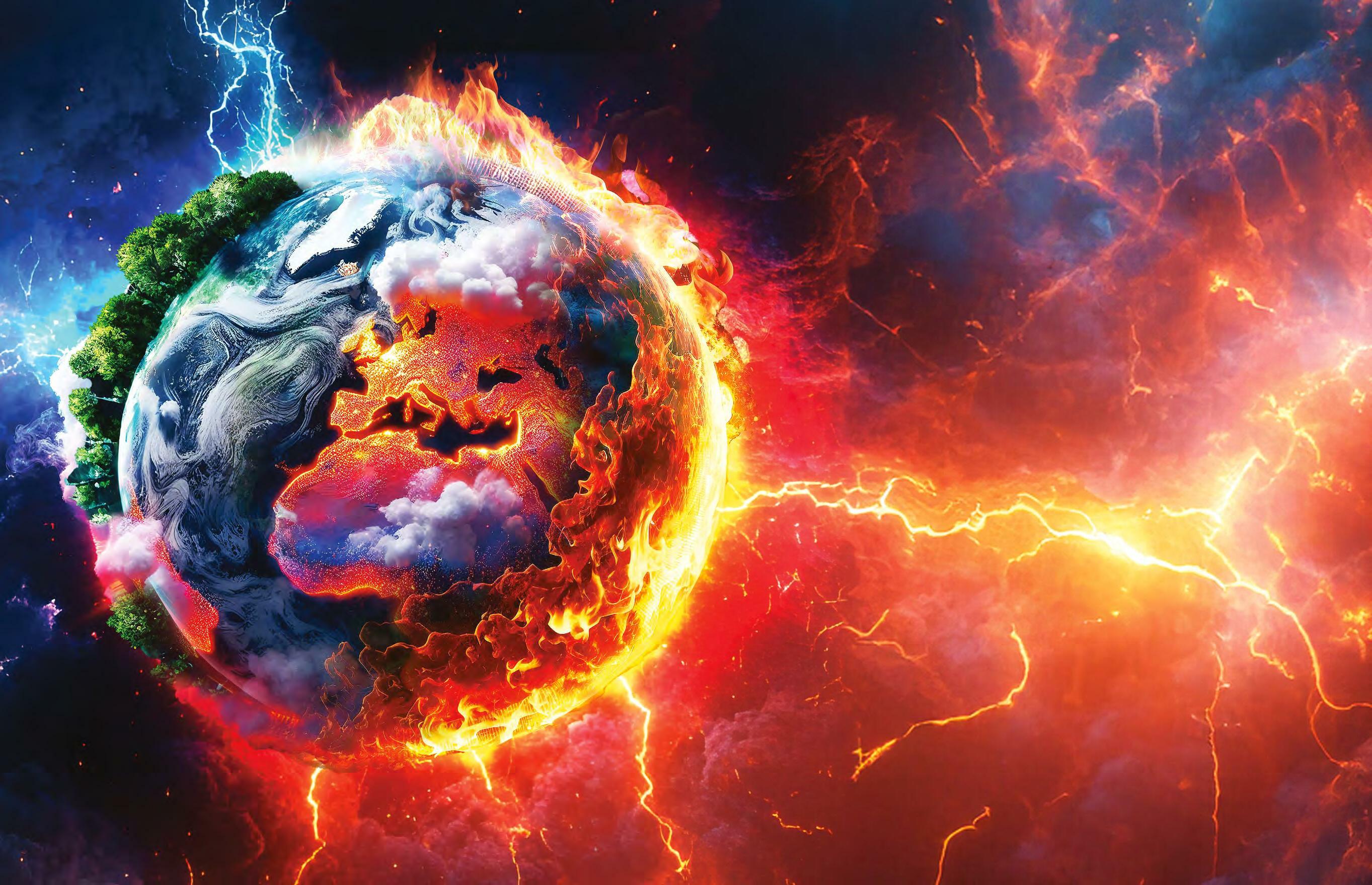
A century ago, our planet was a much cooler place - around one degree Celsius cooler, to be exact. However, since the start of the Industrial Revolution in the late-18th century, Earth has been getting much hotter. The invention of fossil fuel-guzzling machines, such as internal combustion engines and steam trains, has propelled the planet into a new technological era, but has also set it on a trajectory of self-destruction. As a byproduct of early industrialisation, the atmosphere has been saturated by a global outpouring of toxic pollutants called greenhouse gases.
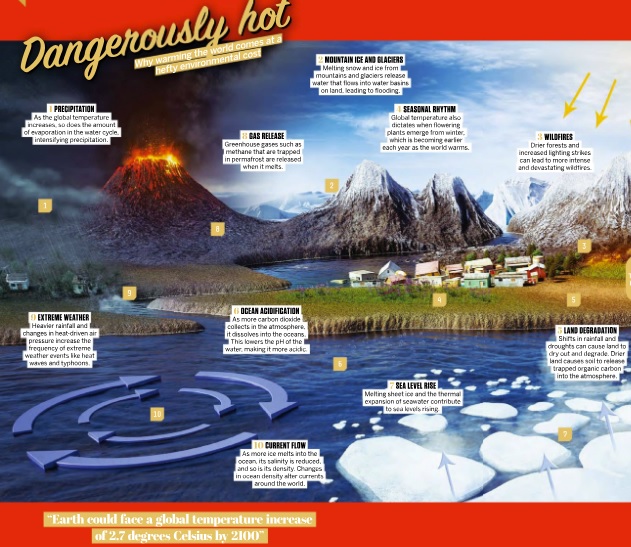
One of the most damaging greenhouse gases is carbon dioxide, which acts like an atmospheric blanket, wrapping Earth in its cosy embrace. In 2023, the global output for carbon dioxide was 37.4 gigatonnes, growing 1.1 per cent from the previous year. However, when the insulating carbon dioxide blanket gets too thick, many of Earth's natural processes fall out of balance, leading to extreme weather events like raging wildfires and rising sea levels - just two of the many ways climate change alters the world.
And global warming can be a vicious cycle: as a result of global temperatures rising, the world's ice and snow are melting. Since the 1900s, the rate of decline of global ice has risen by 57 per cent. This has a direct effect on our planet's ability to deflect the heat of the Sun's rays, known as the albedo effect. Light-coloured surfaces on our planet, such as snow and ice, reflect solar radiation, while dark colours absorb it, along with its heat. The less ice and snow available to reflect solar radiation, the more heat that's absorbed, which leads to further warming.

このストーリーは、How It Works UK の Issue 198 版からのものです。
Magzter GOLD を購読すると、厳選された何千ものプレミアム記事や、10,000 以上の雑誌や新聞にアクセスできます。
すでに購読者ですか? サインイン
How It Works UK からのその他のストーリー

How It Works UK
20 WEARABLE HEALTH TRACKERS
Whether you strap a wellness coach to your wrist or weave subtle sensors into your clothes, these devices are revolutionising how we track our health

9 mins
Issue 210
How It Works UK
SUPERPOWERED PLANTS
The world of plants is vibrant and diverse, just like this book.
1 min
Issue 210
How It Works UK
SECRET STORIES OF LOST BEASTS
We're all aware of the mighty dinosaurs that once roamed Earth, but there are so many weird and wonderful species that have been lost to time.
1 min
Issue 210

How It Works UK
ALL ABOUT BLIMPS
Is it a bird? Is it a spaceship? No... it's a non-rigid airship
2 mins
Issue 210
How It Works UK
SUPER QUESTERS MISSION: RAINFOREST MAGIC
Join adventurers Leo, Lilli and Bea as they transform into superheroes and journey to the rainforest in the pursuit of knowledge.
1 min
Issue 210
How It Works UK
HOW THE MIGHTY MAMMOTH RULED THE ICE AGE
Meet the prehistoric giants that roamed the Arctic Circle thousands of years ago
4 mins
Issue 210
How It Works UK
Have they found LIFE ON MARS?
Although it's by no means certain, scientists are slowly accumulating evidence that life once existed on the Red Planet
2 mins
Issue 210
How It Works UK
HOW FAST DO GLACIERS MOVE?
The speed at which a glacier flows depends on its mass, the depth and slope of the underlying rock bed and friction.
1 min
Issue 210

How It Works UK
HOW IN-FLIGHT WI-FI WORKS
This technology allows you to scroll to your heart's content while killing time at cruise altitude
3 mins
Issue 210
How It Works UK
HOW WIGWAMS WERE BUILT
Discover the construction and living conditions inside these traditional domed dwellings
1 mins
Issue 210
Listen
Translate
Change font size