Prøve GULL - Gratis
Part 11: Buffalo Disease Risk Management
Stockfarm
|April 2020
African buffalo (Syncerus caffer) are iconic animals and part of the so-called Big Five.

Unfortunately, they are natural carriers of diseases that can be harmful to other animals, especially cattle. Farmers in South Africa may own and keep these magnificent animals, but only under specified conditions.
In this article we will look at the legal requirements imposed on buffalo owners in terms of the Animal Diseases Act, 1984 (Act 35 of 1984) and its Regulations.
The four key diseases
Private ownership and movement of buffalo are strictly controlled, as buffalo are carriers of foot-and-mouth disease (FMD) and Corridor disease. This means that while they do not show signs of these diseases, they can transmit them.
They are also susceptible to brucellosis and tuberculosis, which is usually only detected after a significant portion of the herd has already been infected. Buffalo herds in some of South Africa’s largest game parks have become infected with tuberculosis, with far-reaching consequences for these parks. While other controlled diseases can affect buffalo, they are of lesser importance.
Keeping buffalo
A farmer who wants to keep buffalo must first apply for the land (or a portion thereof ) to be registered through the responsible state veterinarian as stipulated in Regulation 20A. A minimum requirement is that the land must have proper fences for game, and therefore a fencing certificate from the relevant nature conservation authority is required. The certificate must state that it is appropriate for keeping buffalo.
Another important requirement, as stated in Regulation 20(8), is that buffalo and cattle may not be kept on the same land. Each application will be assessed on merit, and a certificate of registration will be issued if the national director of Animal Health is satisfied that all the conditions have been met and the keeping of buffalo on the relevant land will not pose a disease threat to the surrounding areas.
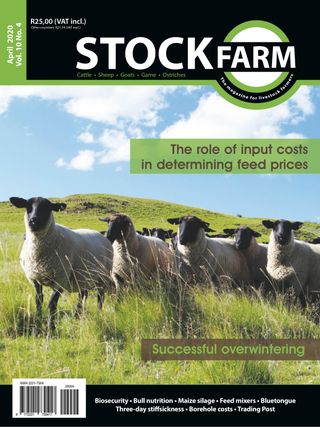

Denne historien er fra April 2020-utgaven av Stockfarm.
Abonner på Magzter GOLD for å få tilgang til tusenvis av kuraterte premiumhistorier og over 9000 magasiner og aviser.
Allerede abonnent? Logg på
FLERE HISTORIER FRA Stockfarm

Stockfarm
World School Milk Day: A national celebration of dairy
The Department of Basic Education (DBE), in partnership with Milk SA's Consumer Education Project (CEP), marked the national celebration of World School Milk Day (WSMD) at Mandlomsobo Primary School in Bronkhorstspruit on 26 September.

2 mins
January 2026
Stockfarm
A breed that you like will work with you
Data can't fix what selection broke, and your grandpa knew it.
4 mins
January 2026
Stockfarm
2025 Santam Agriculture Silage Competition: Wet conditions, winning silage
Plaas Media's twelfth Santam Agriculture National Silage Competition once again showcased impressive expertise among its participants.
4 mins
January 2026
Stockfarm
Unravelling the regulations for dairy and imitation dairy products
Regulation R1510 of 22 November 2019, which governs dairy and imitation dairy products, recently took centre stage during a webinar hosted by the Dairy Standard Agency (DSA). Thabang Rampa, manager of regulatory affairs at the DSA, provided a technical interpretation of key sections of the regulation, aimed at improving industry's understanding of the prescribed minimum compositional and labelling requirements.
3 mins
January 2026

Stockfarm
2025 ARC National Master Dairyman Awards: Top dairy farmers honoured
The Agricultural Research Council (ARC) announced the winners of its 2025 National Master Dairyman Awards during a ceremony held in November at Lanzerac Estate in Stellenbosch.
2 mins
January 2026
Stockfarm
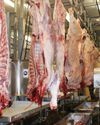
Abattoirs: The hidden pulse of meat safety
In conversations regarding the meat supply chain, the first and final links tend to take prominence, while the work performed by the middlemen often goes unnoticed. Yet every link plays a vital role. The real question is: Do we truly understand the value each link adds? Or has ‘value addition’ become shorthand for 'price addition, leaving producers and consumers feeling the financial strain?
5 mins
January 2026
Stockfarm
Silage equipment you can't do without
Silage is an invaluable resource on many livestock farms but producing it is not always simple or cheap.
3 mins
January 2026
Stockfarm
The value of a vaccination programme for cattle
Vaccination is essential for any cattle operation, especially given the increasing risk of disease outbreaks. According to Dr Paul Reynolds, a veterinarian at the Warden and Vrede Animal Hospitals, vaccines are never developed arbitrarily. Each exists because a specific disease threat warranted it.
4 mins
January 2026
Stockfarm
Silage competition winners: Key success factors
The Santam Agriculture National Silage Competition once again delivered impressive results, maintaining its high standards and enthusiastic participation. This year’s judging spanned six key categories: nutrient composition, fermentation quality, aerobic stability, top-layer losses, compaction or density, and visual assessment.
2 mins
January 2026
Stockfarm
Why use a silage inoculant?
Producing high-quality silage is critical for any livestock operation, especially in regions where seasonal forage shortages are common. One of the most effective ways to improve silage fermentation and preservation is with a silage inoculant.
2 mins
January 2026
Translate
Change font size