Prøve GULL - Gratis
Paupers' Brave New World
BBC History Magazine
|March 2017
In the 1840s, the government began sparing Britain’s most deprived children the Dickensian hell of the workhouse and placing them in schools that promised good food, healthcare and an education. But did the reality live up to the ideal?

A life of grime Children in Twine Court, east London in the 19th century. “The authorities feared that the ingrained immorality of the workhouse would turn child paupers into prostitutes and criminals,” says Lesley Hulonce
It’s one of the most enduring scenes in all of 19th-century literature. The pauper Oliver Twist – nine years old, orphaned and consigned to the workhouse – approaches the pompous parish beadle Mr Bumble and begs him for an extra helping of gruel.” “Please, sir,” he pleads. “I want some more.”
Thanks to his pitiless response, Mr Bumble has secured himself a place in literary infamy. Yet so too has the institution in which Oliver uttered his famous request: the workhouse.
By charting Oliver Twist’s travails, his creator, Charles Dickens, perhaps did more than anyone to highlight the neglect and crippling hunger that faced so many children consigned to Britain’s workhouses. And, by the time Dickens wrote his famous novel in the late 1830s, this fate awaited more and more real-life Olivers.
Workhouses had offered accommodation and employment to those too poor to support themselves since the 17th century. But in 1834, the government, eager to slash spending on the rising number of paupers, passed the Poor Law Amendment Act, declaring that poor relief would now only be offered in the workhouse. And so that was the destination for hundreds of deprived children – those, for example, deserted by their parents, or who had been orphaned at birth.
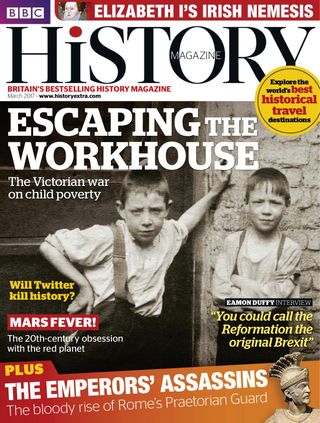

Denne historien er fra March 2017-utgaven av BBC History Magazine.
Abonner på Magzter GOLD for å få tilgang til tusenvis av kuraterte premiumhistorier og over 9000 magasiner og aviser.
Allerede abonnent? Logg på
FLERE HISTORIER FRA BBC History Magazine
BBC History UK
Royal progress
Alice Loxton's new book begins with a compelling premise.

1 mins
January 2026

BBC History UK
"Leaving Muslim contributions out of European history has allowed Islamophobic sentiment to flourish"
THARIK HUSSAIN speaks to Danny Bird about the long but often overlooked and distorted history of Muslims in Europe - and the enduring resistance to its reappraisal
9 mins
January 2026
BBC History UK
7 UNMISSABLE TRIPS IN 2026
With new routes, big anniversaries and fresh ways of discovering familiar favourites, TOM HALL highlights historical destinations to explore this year
4 mins
January 2026
BBC History UK
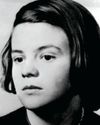
SOPHIE SCHOLL
Novelist Simon Scarrow chooses
2 mins
January 2026
BBC History UK
Portrait of the artists
TRACY BORMAN is enraptured by a beautifully written and richly illustrated exploration of early modern English art
2 mins
January 2026
BBC History UK
Humble heroes
Statues celebrate monarchs, rulers and conquerors - but who remembers the brave folk who gave their lives to save others? Anna Maria Barry recounts stories of selfsacrificing but otherwise ordinary people from the 19th and 20th centuries who are commemorated in one London park.
9 mins
January 2026
BBC History UK
BACK FROM THE DEAD
Britain’s War Office thanked the SAS for its remarkable efforts in WW2 by abolishing it – yet soon realised the error of its ways. Gavin Mortimer tells the story of how the elite unit reinvented itself to confront the challenges of the postwar world
8 mins
January 2026
BBC History UK
Q&A - A selection of historical conundrums answered by experts
Were Roman gladiators vegetarian?
8 mins
January 2026
BBC History UK
Martha McGill on a pioneering study of folk beliefs in early modern England
I was recently chatting with a handful of early modernists about the history book we'd take to a desert island.
1 min
January 2026
BBC History UK
Independent empires
Viewing the British empire through an American lens provides an intriguing alternative perspective on the 'Land of the Free', says DAVID ARMITAGE
4 mins
January 2026
Translate
Change font size