
Gå ubegrenset med Magzter GOLD
Få ubegrenset tilgang til over 9000 magasiner, aviser og premiumhistorier for bare
Prøve GULL - Gratis
Further Animal Liberation
Philosophy Now
|February/March 2021
John Tamilio III augments the arguments of Peter Singer.

The work of the contemporary ethicist Peter Singer has advanced the cause of animal liberation more than any other thinker. Nigel Warburton of the Philosophy Bites podcasts calls this Australian philosopher ‘a modern day gadfly’ in the spirit of Socrates. This article will build upon Singer’s work, adding another dimension to it. Before doing so, however, let me place animal liberation in the context of other liberation movements.
A Short Survey of Liberation Movements
As the name suggests, liberation movements seek the deliverance of an oppressed group. To achieve this, liberationists often seek to expose institutional patterns of oppression constructed upon a worldview by which a privileged group justifies wielding power over another, marginalized, group. Such patterns are often precognitive: the privileged typically assume without much self-criticism that their position of power is natural. In some cases, the oppressed are dehumanized. They are then seen as things, not persons. That’s how oppressive structures survive. When brought to light, the horrific, prejudicial nature of such patterns of thought and life are exposed, which leads, ideally, to reform.
Historically, liberation movements have usually focused on human beings, with people challenging what they see as an injustice within a culture – a wrong in which one group sees itself as superior to another. Such marginalization has been based on race, class, ethnicity, gender, sexual orientation, religion, and a host of other categories that would seek not to be scrutinized, for scrutiny would undermine their authority. When Thomas Jefferson opened the US Declaration of Independence with the phrase “We hold these truths to be self-evident, that all men are created equal,” he meant
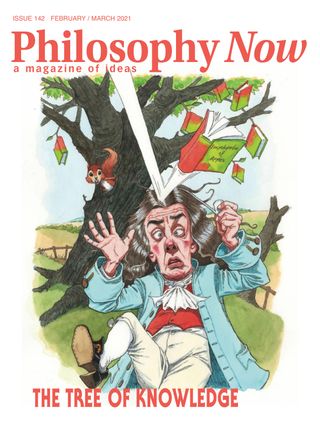

Denne historien er fra February/March 2021-utgaven av Philosophy Now.
Abonner på Magzter GOLD for å få tilgang til tusenvis av kuraterte premiumhistorier og over 9000 magasiner og aviser.
Allerede abonnent? Logg på
FLERE HISTORIER FRA Philosophy Now

Philosophy Now
Nosferatu
Stefan Bolea considers two very different artistic approaches to love and death.

6 mins
April/May 2025

Philosophy Now
Heidegger's Ghost
Raymond Tallis wonders where Heidegger's body went when he was philosophising.
7 mins
April/May 2025

Philosophy Now
Is Comedy Good For Us?
Damaris Stock has a laugh with Plato and friends.
10 mins
April/May 2025
Philosophy Now
In Defense of Idleness
Wendell O'Brien says, 'Just Don't Do It'.
10 mins
April/May 2025

Philosophy Now
Leaving Nothing to Chance by Carl Knight
LEAVING NOTHING TO Chance (2025) by Carl Knight, is an informed, proficient and lucid defence of luck egalitarianism.
3 mins
April/May 2025

Philosophy Now
Star Maker by Olaf Stapledon
THE 1937 SCIENCE FICTION novel Star Maker was written by philosophy professor Olaf Stapledon in the dark days as Europe awaited the onslaught of Nazi Germany. This casts a shadow over the whole book.
6 mins
April/May 2025
Philosophy Now
Love & Emptiness in the Sufi Tradition
Medha Ninad Tambe meditates on Rumi, love and self-negation.
7 mins
April/May 2025

Philosophy Now
The Hedgehog's Dilemma: A Metaphor About the Challenges of Human Intimacy
Krishna Chaubey explains Arthur Schopenhauer's poignant thought experiment.
4 mins
April/May 2025
Philosophy Now
The Mirror & the Flame
Rebwar Fatah imagines Attar's & Hegel's shared path.
4 mins
April/May 2025
Philosophy Now
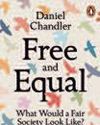
Free and Equal by Daniel Chandler
DANIEL CHANDLER, AN economist and philosopher based at the London School of Economics, begins Free and Equal: What Would a Fair Society Look Like? (2023) by asking an intriguing question. How is it, he wonders, that the most influential political philosopher of the last century has had almost no practical impact on politics or policy? The philosopher in question is John Rawls, whose magnum opus was A Theory of Justice (1971).
5 mins
April/May 2025
Translate
Change font size