
Gå ubegrenset med Magzter GOLD
Få ubegrenset tilgang til over 9000 magasiner, aviser og premiumhistorier for bare
Prøve GULL - Gratis
Are We Close To Making Our Home Away From Earth?
BBC Knowledge
|August 2017
Our exploration of the cosmos is hampered by our bodies and minds, which struggle in space. So could we ever overcome our Biology and settle among the stars?

You might have thought from watching videos of astronauts aboard the International Space Station (ISS) that spaceships were pretty benign environments. Floating around in microgravity looks like a lot of fun, and, as you’re isolated from the rest of the human population, you’re effectively quarantined against catching flu or any other transmissible disease. But, in fact, space is pretty harmful to the human body. We evolved as social animals under the conditions on Earth, and travelling beyond the planet has a number of negative effects on the body and mind.
So what are the main risks encountered by spacefarers, and what does the latest research have to say about how to solve these problems for long-duration missions in the future?
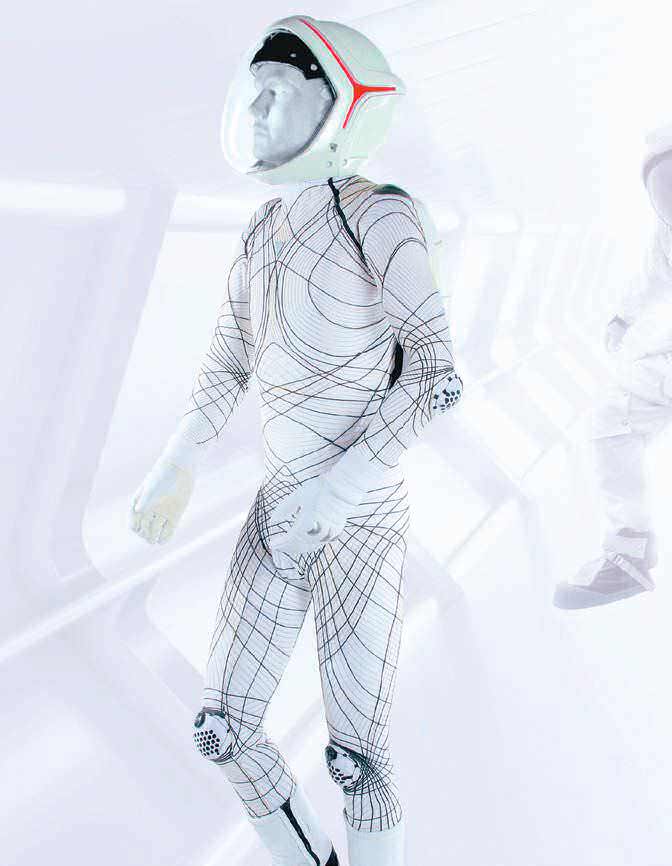
[ GRAVITY ]
Freefalling around the Earth in orbit, or coasting through interplanetary space on your way to Mars, gives you the sensation of weightlessness. You’re still moving under gravity, but it doesn’t load your body, and this has a whole host of knock-on effects. For example, your inner ear can no longer help you orientate yourself, and the redistribution of bodily fluids causes your face to puff up and your eyeballs to distort.

Denne historien er fra August 2017-utgaven av BBC Knowledge.
Abonner på Magzter GOLD for å få tilgang til tusenvis av kuraterte premiumhistorier og over 9000 magasiner og aviser.
Allerede abonnent? Logg på
FLERE HISTORIER FRA BBC Knowledge

BBC Knowledge
Are We Close To Making Our Home Away From Earth?
Our exploration of the cosmos is hampered by our bodies and minds, which struggle in space. So could we ever overcome our Biology and settle among the stars?

10 mins
August 2017

BBC Knowledge
The Viruses That Made Us Human
Viruses give us infections, from the common cold to Ebola and Aids. But new research shows that they may also have played a key role in shaping the evolution of homo sapiens.
9 mins
June 2017

BBC Knowledge
Can You Supercharge Your Brain?
Your brain is the finely-tuned machine that controls all your actions and emotions, so it makes sense to keep it well-oiled. But, asks Rita Carter, are there any scientifically proven methods to ensure it works better for longer?
7 mins
June 2017

BBC Knowledge
First Self- Balancing Robot
This robot is the Planar Elliptical Runner (PER).
1 min
August 2017

BBC Knowledge
Is Social Media Making You Anti-Social?
Many of us have experienced the ways in which social media has changed the online world. But should we be worried about it altering our behaviour too?
8 mins
August 2017

BBC Knowledge
What You Need To Know Before You Get In A Driverless Car
Autonomous vehicles can take much of the danger out of driving, but they also present us with new problems to solve. So what needs to be figured out before the technology gets the green light?
7 mins
August 2017

BBC Knowledge
Saadat Hasan Manto
Saadat Hasan Manto felt deeply and wrote strongly; his work invigorates and disturbs.
7 mins
August 2017

BBC Knowledge
King Of The Mountains
Picture a primate that grazes like a cow, climbs cliffs like a mountain goat and forms groups as big as shoals of fish. Noah Snyder-Mackler introduces Ethiopia’s gelada.
7 mins
December 2016

BBC Knowledge
Is Technology Changing Our Brains?
We increasingly rely on social media to talk to friends, GPS to navigate and the web for information. But, asks Jo Carlowe, is that wise?
10 mins
February 2017

BBC Knowledge
Are You a Genetic Superhero?
Recent research has revealed a handful of ‘superheroes’ walking among us, whose DNA gifts them with resistance against serious diseases. Now, as Kat Amey observes, just have to find them…
8 mins
February 2017
Translate
Change font size