
Gå ubegrenset med Magzter GOLD
Få ubegrenset tilgang til over 9000 magasiner, aviser og premiumhistorier for bare
ROOM FOR A LITTLE ONE?
BBC Wildlife
|October 2022
The once ubiquitous house sparrow has suffered a drastic decline. It’s time to step in and lend our small and charming neighbours a helping hand.
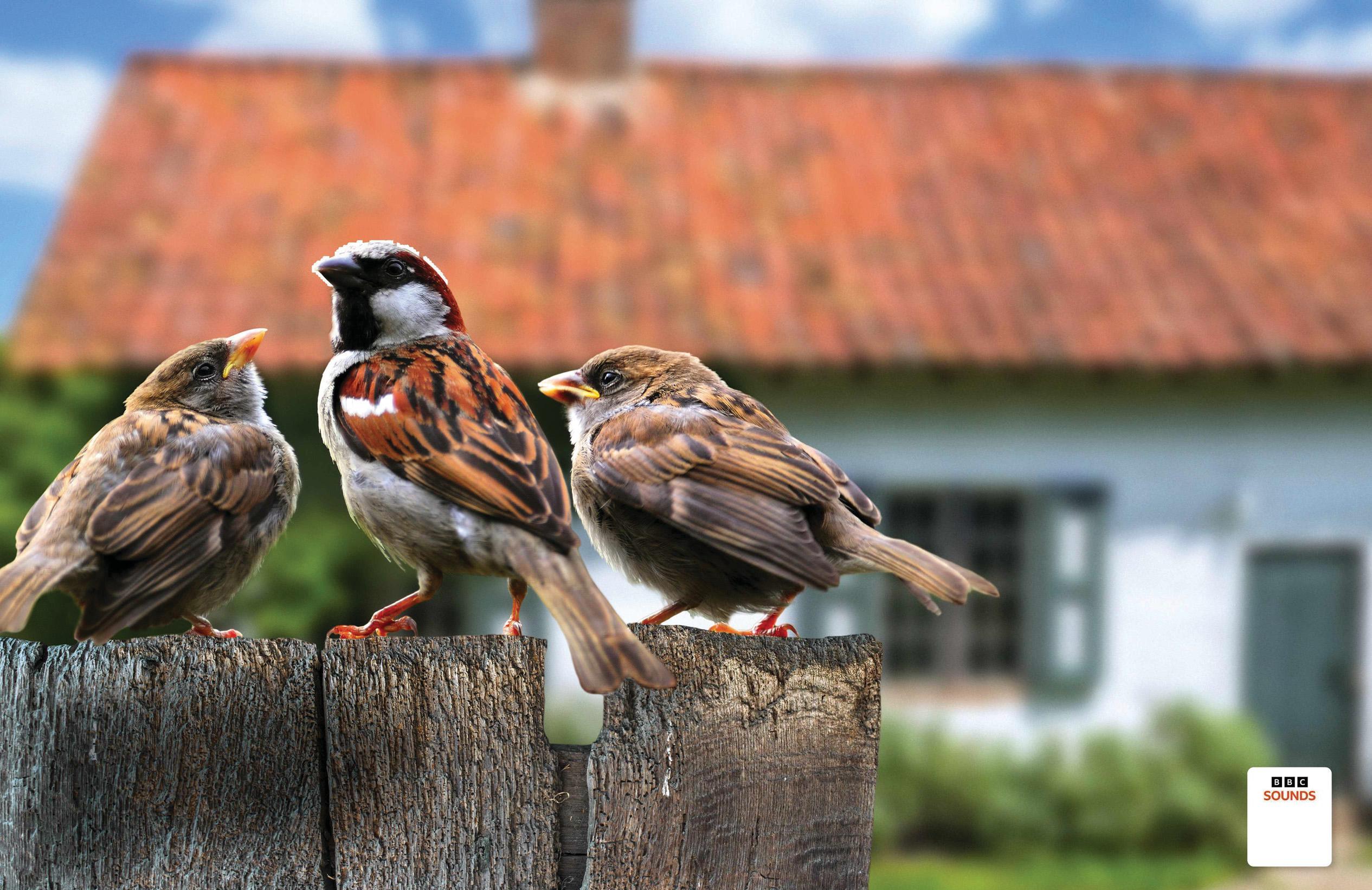
THE CLATTER OF TRAFFIC IS PIERCED MOMENTARILY by the sound of my drill screaming into the brickwork. I'm halfway up a ladder clinging to the chimney of my local pub, the Red Lion (which is ironically painted green), surrounded by an expansive landscape of concrete, interspersed by the occasional fluffy green bush.
My assistant, Matthew, relays screws to me with an outstretched arm. He has offered his assistance in return for a supermarket meal deal.
It’s August 2021 and we’re installing birdboxes around Portsmouth in the warmth of a golden sun. This is the seventh of the day. Four are already in place on the pub’s exterior and, earlier this morning, two went up on the walls of an antique furniture shop. Bar the boisterous gangs of gulls, there’s only one bird around, and it’s the very species we’re trying to create a home for: the humble house sparrow.
House sparrows, you see, need our help. They may be regarded as common brown birds, yet these characterful little passerines are struggling. We still don’t know exactly why, but in urban areas, it’s likely the result of air pollution attacking their delicate lungs; a catastrophic decline in their invertebrate prey; disease, including avian malaria; and the loss of the older buildings – complete with loose tiles, crooked eaves and other nooks and crannies – in which they nest.
Between 1966 and 2016, we lost a staggering 21.7 million of them, almost one per minute. The scenes of urban hedges fat with chestnut bodies and parks loud with evocative squabbles are now a distant memory. Hyde Park was once thronged with hundreds of sparrows but, like many other parts of the capital, has fallen silent.

Denne historien er fra October 2022-utgaven av BBC Wildlife.
Abonner på Magzter GOLD for å få tilgang til tusenvis av kuraterte premiumhistorier og over 9000 magasiner og aviser.
Allerede abonnent? Logg på
FLERE HISTORIER FRA BBC Wildlife
BBC Wildlife
"I was terrified the elephant would ram us"
African elephant in Kenya

2 mins
January 2026
BBC Wildlife
ALL YOU EVER NEEDED TO KNOW ABOUT THE Fennec fox
THE FENNEC FOX IS THE SMALLEST fox in the world, with a body length that can be as little as 24cm.
3 mins
January 2026
BBC Wildlife
INTO THE PLASTISPHERE
A unique synthetic ecosystem is evolving in our oceans – welcome to the plastisphere
7 mins
January 2026
BBC Wildlife
“More than half of all animal life exists in a parasitic relationship, and all life lives in symbiosis”
Our survival depends on species evolving to live together - but some relationships take dark turns
7 mins
January 2026
BBC Wildlife
Are animals able to dream?
SLEEP IS A MYSTERIOUS THING. FOR A long time, we weren't sure why we do it.
1 mins
January 2026
BBC Wildlife
Does a cuckoo know it's a cuckoo?
ABSURD LITTLE BIRDS ACROSS THE world lay their eggs in the nests of other species, leaving the hapless parents to raise a changeling at the expense of their own offspring.
2 mins
January 2026
BBC Wildlife
Orcas killing young sharks
Juvenile great whites are easy prey for orca pod
1 mins
January 2026
BBC Wildlife
Ocean goes on tour
Acclaimed film touring the UK, backed by live orchestra and choir
1 min
January 2026
BBC Wildlife
Feisty bats hunt like lions
Winged mammals use a 'hang and wait' strategy to take down large prey
1 mins
January 2026
BBC Wildlife
SNAP-CHAT
Richard Birchett on magical merlins, wily coyotes and charging deer
2 mins
January 2026
Translate
Change font size