Prøve GULL - Gratis
Unearthing a Forgotten Roman Town
Archaeology
|January/February 2025
A stretch of Italian farmland concealed one of the small cities that powered the empire

SOMETIME IN THE LATE FIRST century B.c., a man by the name of Marcus Novius Tubula left the Italian countryside and moved to Rome. Tubula was from a town called Interamna Lirenas, located 75 miles southeast of the capital, and was chasing his dreams of something bigger.
Tubula found political success and was elected as a tribune of the plebs, once one of the most important offices in Rome. To publicize his achievement to those back home, he had a limestone sundial erected in Interamna's forum. The timepiece, which was inscribed with Tubula's name and elected office, functioned as an ancient billboard, announcing that he was now someone with clout. A small-town boy had made it in the big city.
Rome has been called a civilization of cities, and it seemed especially so during the first through fifth centuries A.D. Doubtless, large cities were a cornerstone of the Roman Empire and served as crucial centers for the administration of its vast territory. At the empire's height, Roman borders held an estimated 70 million people, many of whom lived in around 2,000 cities, from Iberia to the Middle East and from Britain to NorthAfrica. Rome itself is thought to have reached a population of one million in the first century A.D., while other imperial urban centers, such as Antioch and Ephesus in Anatolia, Carthage in North Africa, and Alexandria in Egypt, had populations estimated in the hundreds of thousands.

Denne historien er fra January/February 2025-utgaven av Archaeology.
Abonner på Magzter GOLD for å få tilgang til tusenvis av kuraterte premiumhistorier og over 9000 magasiner og aviser.
Allerede abonnent? Logg på
FLERE HISTORIER FRA Archaeology
Archaeology
THE EGYPTIAN SEQUENCE
Until now, the earliest Egyptians to have even part of their DNA sequenced were three people who lived between 787 and 544 B.C.

1 mins
November/December 2025

Archaeology
SOURCE MATERIAL
As early as 40,000 years ago, some hunter-gatherers in southern Africa ventured long distances to procure special types of stone to make their tools.
1 min
November/December 2025

Archaeology
Secrets of the Seven Wonders
How archaeologists are rediscovering the ancient world's most marvelous monuments
13 mins
November/December 2025
Archaeology
ACTS OF FAITH
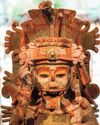
Evidence emerges of the day in 1562 when an infamous Spanish cleric tried to destroy Maya religion
12 mins
November/December 2025

Archaeology
OASIS MAKERS OF ARABIA
Researchers are just beginning to understand how people thrived in the desert of Oman some 5,000 years ago
8 mins
November/December 2025

Archaeology
FOSSIL FORCE
One of the planet's most successful arthropods, trilobites, abounded in the oceans from about 520 million to 250 million years ago.
1 min
November/December 2025
Archaeology
BIGHORN MEDICINE WHEEL, WYOMING
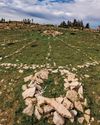
Perched almost 9,700 feet above sea level on Medicine Mountain in Wyoming's Bighorn Range, the Medicine Wheel is an 80-foot-diameter circular structure made from limestone boulders.
2 mins
November/December 2025
Archaeology
ANCIENT LOOK BOOK
A young woman buried in China's Tarim Basin some 2,000 years ago went to the afterlife accompanied by the height of fashion.
1 mins
November/December 2025
Archaeology
A FAMILIAR FACE
In the early eleventh century, a landslide on the island of Ostrów Lednicki in western Poland caused a hillfort to collapse and slip to the bottom of Lake Lednica.
1 min
November/December 2025
Archaeology
Temples to Tradition
A looted cache of bronzes compels archaeologists to explore Celtic sanctuaries across Burgundy
13 mins
November/December 2025
Listen
Translate
Change font size