Gå ubegrenset med Magzter GOLD
Få ubegrenset tilgang til over 9000 magasiner, aviser og premiumhistorier for bare
Prøve GULL - Gratis
Pick Businesses, Not Stocks
Kiplinger's Personal Finance
|September 2023
WARREN Buffett, the chairman of Berkshire Hathaway, is the most successful investor of our time. His daughter, Susan, worked as my assistant when I was publisher of a magazine 40 years ago. Just before she got married, Susie told me she worried that her fiancé’s parents had bought a couple shares of Berkshire stock—and what if it tanked? At the time, the price was about $1,000 a share. Today, it’s $507,000 a share. I hope the in-laws hung on.
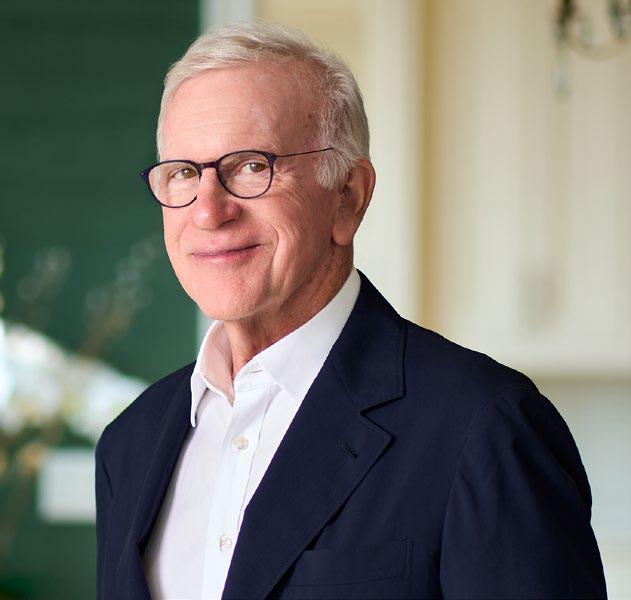
In his latest annual report, Warren Buffett calculates that the average yearly gain in market value from his acquisition of Berkshire in 1965 through the end of 2022 was 19.8%, compared with 9.9% for the S&P 500—an astounding difference, matched by no one of whom I’m aware. And Berkshire beat the market in two-thirds of the years.
So, as it turns out, you can beat the averages—or at least Warren Buffett can. What can mere mortals learn from his success?
First, let’s understand Berkshire Hathaway Inc. Buffett writes that in 1965 it was a “one-trick pony, the owner of a venerable—but doomed— New England textile operation.” Buffett switched to insurance and bought National Indemnity, a company he still owns.
STREET SMART
Today, Berkshire has three major kinds of investments: cash (a war chest of $104 billion, as of March 31); companies that Berkshire operates and typically owns in full, ranging from GEICO to BNSF Railway to See’s Candies; and publicly traded stocks that you can buy yourself.
At last count, Berkshire owned shares of 46 different public companies, but a few dominate, with just five stocks accounting for threefourths of the value of Buffett’s stock holdings: Apple, Bank of America, Coca-Cola, American Express and Chevron. Buffett doesn’t worry about concentration. He likes to quote the actress Mae West: “Too much of a good thing can be wonderful!” But the overall portfolio (operating companies plus stocks) is certainly diversified by sector. He owns tech, banks, energy companies, consumer-goods firms, health care, automakers, retailers, media, railroads, charter jets, furniture, homebuilders, insurance and more.


Denne historien er fra September 2023-utgaven av Kiplinger's Personal Finance.
Abonner på Magzter GOLD for å få tilgang til tusenvis av kuraterte premiumhistorier og over 9000 magasiner og aviser.
Allerede abonnent? Logg på
FLERE HISTORIER FRA Kiplinger's Personal Finance

Kiplinger's Personal Finance
A TAX BREAK FOR MEDICAL EXPENSES
The editor of The Kiplinger Tax Letter responds to readers asking about health care write-offs.

2 mins
February 2026

Kiplinger's Personal Finance
Volunteering to Help Others at Tax Time
Through an IRS program, qualifying individuals can get free assistance with their tax returns.
2 mins
February 2026

Kiplinger's Personal Finance
CATCH-UP SAVERS FACE A TAXING 401(K) CHANGE
Under new rules, you may lose an up-front deduction but gain tax-free income once you retire.
2 mins
February 2026

Kiplinger's Personal Finance
The Case for Emerging Markets
Economic growth, earnings acceleration and bargain prices favor EM stocks.
3 mins
February 2026

Kiplinger's Personal Finance
THE NEW RULES OF RETIREMENT
Popular guidelines about how to save, invest and spend need to be updated and personalized to ensure you'll never run out of money.
15 mins
February 2026

Kiplinger's Personal Finance
Smart Ways to Share a Credit Card
Adding an authorized user has its benefits, but make sure you set the ground rules.
2 mins
February 2026

Kiplinger's Personal Finance
THE BEST AFFORDABLE FITNESS TRACKERS
These devices monitor your exercise, sleep patterns and more- and they don't cost an arm and a leg.
4 mins
February 2026
Kiplinger's Personal Finance
A VALUE FOCUS CLIPS RETURNS
THERE'S more to Mairs & Power Growth than its name implies. The managers favor firms with above-average earnings growth. But a durable, competitive position in their market- “a number-one or number-two position and gaining share,” says comanager Andrew Adams—and a reasonable stock price matter even more.
1 mins
February 2026

Kiplinger's Personal Finance
Look Beyond the Tech Giants
I am hooked on a podcast called Acquired, in which two smart guys do a deep analytical dive, typically lasting three or four hours, on a single successful company such as Coca-Cola or Trader Joe's. Ben Gilbert and David Rosenthal, a pair of venture capitalists, are especially adept at explaining what's behind the success of such tech giants as Alphabet (symbol GOOGL, $320), the former Google, which recently merited 11 hours and 42 minutes of dialogue all by itself.
4 mins
February 2026

Kiplinger's Personal Finance
How to Pay for Long-Term Care
A couple of months ago, I wrote that many Americans significantly underestimate how long they could live in retirement (see “Living in Retirement,” Dec.). With the possibility of a 30-year retirement becoming more common, retirees need to plan for so-called longevity risk to make sure their assets last a lifetime. And the longer you live, the more likely you'll need to pay for some form of long-term care. That can range from assistance with activities of daily living to in-home care to a nursing home stay.
2 mins
February 2026
Translate
Change font size