Prøve GULL - Gratis
Kant the (P)Russian Philosopher?
Philosophy Now
|April / May 2024
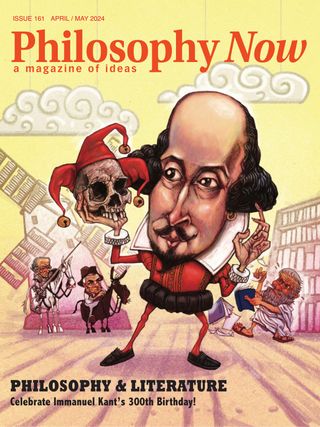
Robert R. Clewis considers present implications of Kant’s Russian connections.

According to Immanuel Kant, perpetual peace is the “highest political good”, while war is the source of the “greatest evils that oppress civilized nations.” Russia’s 2022 invasion of Ukraine has indeed created suffering for many. It also violated Kant’s principle that “No state shall forcibly interfere in the constitution and government of another state” (Perpetual Peace: A Philosophical Sketch, 1795). The war has also affected some surprising areas – even the world of philosophy. In particular it has created some tough dilemmas for Kant societies around the world.
The renowned philosopher was born three hundred years ago, on April 22, 1724, in Königsberg, a port city not far from the Baltic Sea, which was then a major city in East Prussia. Carved up by the canals of the Pregel River, the city was famous for its seven bridges, which gave rise to Euler’s math problem the ‘Seven Bridges of Königsberg’: is it possible to take a walk in which you cross all seven bridges of the city just once and arrive back where you started? (Euler: No.) The city is now called Kaliningrad, and is part of Russia, yet even today shops throughout Kaliningrad are filled with merch and trinkets in Kant’s likeness. He is a valuable symbol of the city.

Denne historien er fra April / May 2024-utgaven av Philosophy Now.
Abonner på Magzter GOLD for å få tilgang til tusenvis av kuraterte premiumhistorier og over 9000 magasiner og aviser.
Allerede abonnent? Logg på
FLERE HISTORIER FRA Philosophy Now

Philosophy Now
Nosferatu
Stefan Bolea considers two very different artistic approaches to love and death.

6 mins
April/May 2025
Philosophy Now
Heidegger's Ghost
Raymond Tallis wonders where Heidegger's body went when he was philosophising.
7 mins
April/May 2025

Philosophy Now
Is Comedy Good For Us?
Damaris Stock has a laugh with Plato and friends.
10 mins
April/May 2025
Philosophy Now
In Defense of Idleness
Wendell O'Brien says, 'Just Don't Do It'.
10 mins
April/May 2025
Philosophy Now
Leaving Nothing to Chance by Carl Knight
LEAVING NOTHING TO Chance (2025) by Carl Knight, is an informed, proficient and lucid defence of luck egalitarianism.
3 mins
April/May 2025

Philosophy Now
Star Maker by Olaf Stapledon
THE 1937 SCIENCE FICTION novel Star Maker was written by philosophy professor Olaf Stapledon in the dark days as Europe awaited the onslaught of Nazi Germany. This casts a shadow over the whole book.
6 mins
April/May 2025
Philosophy Now
Love & Emptiness in the Sufi Tradition
Medha Ninad Tambe meditates on Rumi, love and self-negation.
7 mins
April/May 2025

Philosophy Now
The Hedgehog's Dilemma: A Metaphor About the Challenges of Human Intimacy
Krishna Chaubey explains Arthur Schopenhauer's poignant thought experiment.
4 mins
April/May 2025
Philosophy Now
The Mirror & the Flame
Rebwar Fatah imagines Attar's & Hegel's shared path.
4 mins
April/May 2025
Philosophy Now
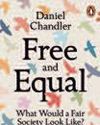
Free and Equal by Daniel Chandler
DANIEL CHANDLER, AN economist and philosopher based at the London School of Economics, begins Free and Equal: What Would a Fair Society Look Like? (2023) by asking an intriguing question. How is it, he wonders, that the most influential political philosopher of the last century has had almost no practical impact on politics or policy? The philosopher in question is John Rawls, whose magnum opus was A Theory of Justice (1971).
5 mins
April/May 2025
Listen
Translate
Change font size