
Gå ubegrenset med Magzter GOLD
Få ubegrenset tilgang til over 9000 magasiner, aviser og premiumhistorier for bare
Prøve GULL - Gratis
Stuck In Place
The Atlantic
|March 2025
Why Americans stopped moving houses-and why that's a very big problem

The idea that people should be able to choose their own communities instead of being stuck where they are born―is a distinctly American innovation. It is the foundation for the country's prosperity and democracy, and it just may be America's most profound contribution to the world.
No society has ever been as mobile as the United States once was. No society has even come close. In the 19th century, the heyday of American mobility, roughly a third of all Americans changed addresses each year. European visitors were astonished, and more than slightly appalled. The American "is devoured with a passion for locomotion," the French writer Michel Chevalier observed in 1835; "he cannot stay in one place." Americans moved far more often, over longer distances, and to greater advantage than did people in the lands from which they had come. They understood this as the key to their national character, the thing that made their country distinctive. "We are a migratory people and we flourish best when we make an occasional change of base," one 19th-century newspaper explained. "We have cut loose from the old styles of human vegetation, the former method, of sticking like an oyster to one spot through numberless succeeding generations," wrote another.
As the 19th century turned into the 20th, as two world wars passed, as the Baby Boom began, Americans kept on moving. And as Americans moved around, they moved up. They broke away from stultifying social hierarchies, depleted farmland, declining towns, dead-end jobs. If the first move didn't work out, they could always see a more promising destination beckoning them onward.
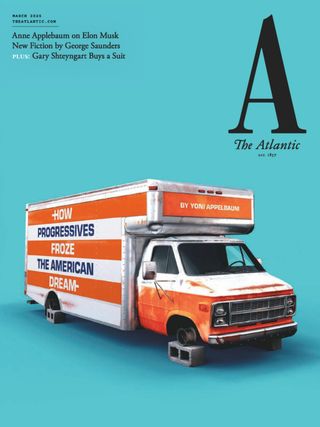

Denne historien er fra March 2025-utgaven av The Atlantic.
Abonner på Magzter GOLD for å få tilgang til tusenvis av kuraterte premiumhistorier og over 9000 magasiner og aviser.
Allerede abonnent? Logg på
FLERE HISTORIER FRA The Atlantic
The Atlantic
Deadlier Than Gettysburg
How the cruelty of the Confederacy's prison camps gave rise to the rules of war

10 mins
March 2026

The Atlantic
THE MAN WHO BROKE PHYSICS
One of the pleasures of watching Ilia Malinin, apart from his indifference to gravity, is to witness him becoming.
16 mins
March 2026

The Atlantic
How Toni Morrison Saw History
In her novels, she located the missing story of Black America.
12 mins
March 2026

The Atlantic
The Madness of Lord Tennyson
The Victorian poet was startlingly modern.
5 mins
March 2026

The Atlantic
THE PLOT AGAINST THE HUMANITIES
What is the Andrew W. Mellon Foundation doing to higher education?
22 mins
March 2026

The Atlantic
Why Do Democrats Hate Winning?
Ken Martin has one of those resting dread faces, as if he's bracing for someone to dump a bucket of rocks on his head.
37 mins
March 2026

The Atlantic
ROD DREHER'S DEMONS
HE DERIDES THE ENLIGHTENMENT, SECULARISM, AND THE MODERN WORLD. CONSERVATIVES-INCLUDING THE VICE PRESIDENT-ARE JOINING HIM ON A MARCH BACK TO THE MIDDLE AGES.
20 mins
March 2026

The Atlantic
Every Nation for Itself
President Trump wants to return to the 19th century's international order. He will leave America less prosperous—and the whole world less secure.
19 mins
March 2026

The Atlantic
The Secrets of Indigenous Art
Major exhibits are upending the way people understand Native American and Aboriginal artists.
14 mins
March 2026

The Atlantic
The Novel as Extended Op-Ed
If anyone could write good fiction about immigration, it would probably be Lionel Shriver. Instead, her latest book goes off the rails.
10 mins
March 2026
Listen
Translate
Change font size