
Gå ubegrenset med Magzter GOLD
Få ubegrenset tilgang til over 9000 magasiner, aviser og premiumhistorier for bare
Prøve GULL - Gratis
A GLARING OMISSION
The Caravan
|April 2025
What Arun Shourie's take on Savarkar fails to admit
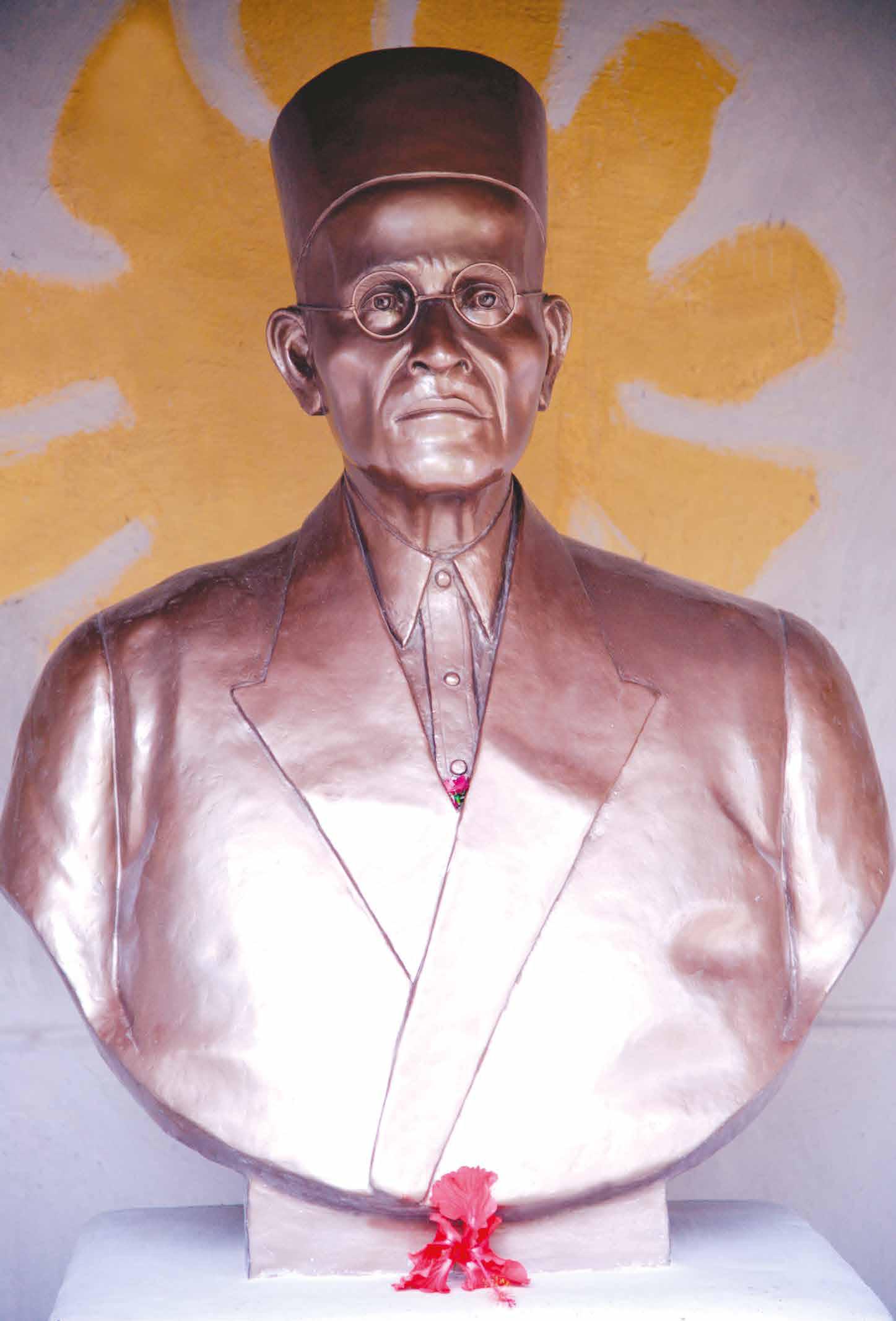
THE QUESTION of political transfor-mation does not only beleaguer VD Savarkar, it turns out. In trying to answer this question apropos the Hindutva proponent in his recent book, The New Icon: Savarkar and the Facts, Arun Shourie, a journalist and former member of the Bharatiya Janata Party, provokes a similar question about himself. His decimation of Savarkar in this meticulously researched book comes after decades of defending the Savarkarite imagination of state and power. But at no point in the book does he address his own transformation.
Shourie's silence on this vital question makes it difficult to read his book without qualms. The question is necessary to flag, as Savarkar's Hindutva is now the unofficial ideology of the Indian government and Shourie himself served its forces for decades as one of their leaders. Therefore, an explanation of what caused his disillusionment—if this is, in fact, the case—was essential to the book. Unlike standard biographies, The New Icon does not begin at the beginning and end at the end, instead taking episodic leaps back and forth across thematic concerns. The logical lines that Shourie pursues largely lead him to well-founded conclusions, although there are certain slips.
Perhaps the strongest part of the book, in terms of detail and sourcing, is the section that deals with a transformed Savarkar, after he became a British collaborator following his release from jail. Prior to that, while studying law in London, Savarkar had been fiercely anti-British. In 1911, he was arrested in a murder case, tried in India, handed a double life sentence and incarcerated in the Andaman and Nicobar Islands. He secured his release, in 1924, after writing a series of mercy petitions to the colonial authorities, making abject appeals and pledging loyalty, obedience and good behaviour in return for clemency. Months before his release from prison, he penned a slim book,

Denne historien er fra April 2025-utgaven av The Caravan.
Abonner på Magzter GOLD for å få tilgang til tusenvis av kuraterte premiumhistorier og over 9000 magasiner og aviser.
Allerede abonnent? Logg på
FLERE HISTORIER FRA The Caravan

The Caravan
Dim Views
Punjab's new media suffers from old problems

22 mins
February 2026

The Caravan
ON FIRM GROUND
The civic struggle against uranium mining in the West Khasi Hills
6 mins
February 2026

The Caravan
DANGEROUS LIAISON
Why India enabled Israel's genocide in Gaza
44 mins
February 2026

The Caravan
Platform for Change
A women-led union gives voice to India's gig workers
6 mins
February 2026
The Caravan
NARAVANE'S Moment of Truth
An army chief's unpublished memoir exposes how the Modi government spun the China border crisis
44 mins
February 2026
The Caravan
A Brief History of the Slap
How Telugu cinema's heroes turn violence against women into romance
9 mins
February 2026

The Caravan
FACE PALM
Why the Congress keeps losing elections
33 mins
January 2025

The Caravan
The Great Transformation
Challenges facing independent news outlets in the digital age/Media
6 mins
January 2025

The Caravan
The Mob Comes for Film Critics
Dhurandhar and the manufacture of a national consensus
11 mins
January 2025
The Caravan
Memories Are Made of This
FOOD IN DALIT AND ADIVASI WRITING
15 mins
January 2025
Listen
Translate
Change font size