
Gå ubegrenset med Magzter GOLD
Få ubegrenset tilgang til over 9000 magasiner, aviser og premiumhistorier for bare
LIFTING THE LID ON ANTARCTICA
How It Works UK
|Issue 194
What was the coldest continent like without ice?

Antarctica hasn't always been a cold desert. For around 100 million years the southernmost continent was covered by lush rainforests and roamed by dinosaurs. Like all of the continents, the landmass of Antarctica sits on one of the seven major plates of Earth's crust. The heat generated by the core of our planet causes these plates to slowly move around the globe at a rate of around 1.5 centimetres per year. Throughout over 4-billion-years of Earth's history, the continents have found themselves in different orientations. Around 200 million years ago Antarctica was a long way from the South Pole and sat near the equator, shoulder to shoulder with Africa, South America and Australia. These continents formed a giant landmass known as Gondwanaland. Without a shard of ice in sight, Antarctica was a warm, rainforest-laden continent that looked more like modern-day New Zealand.
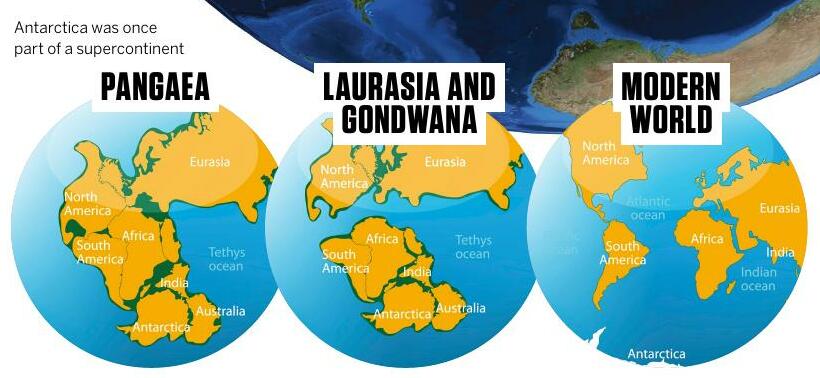 By around 90 to 83 million years ago, Antarctica reached its current location at the South Pole. At a time when Earth was experiencing its warmest climate in history, the surface temperature of Antarctica was around 12 degrees Celsius. This allowed swampy forests to persist on the continent, especially in West Antarctica, around 560 miles from the South Pole. As well as lush foliage, coldblooded reptiles such as ankylosaurus and mosasaurs called Antarctica home until around 34 million years ago, when the continent was encased in a sheet of ice. Swapping the forests for glaciers and dinosaurs for prehistoric penguins, it took just over 200,000 years for Antarctica to freeze as global temperatures fell by up to four degrees Celsius. Sea levels also fell by 40 metres as water was frozen into the sheet that covers the South Pole today.

Denne historien er fra Issue 194-utgaven av How It Works UK.
Abonner på Magzter GOLD for å få tilgang til tusenvis av kuraterte premiumhistorier og over 9000 magasiner og aviser.
Allerede abonnent? Logg på
FLERE HISTORIER FRA How It Works UK
How It Works UK
ASTRONAUTS SEE COMET LEMMON 'ABSORBED' BY AURORAE
For skywatchers, scientists and even the astronauts on the International Space Station (ISS), the skies have been active. The Sun has released its largest eruptions of 2025, sparking a series of aurorae that have reached as far south as Mexico. While astronauts on the ISS had to take shelter during the recent solar storms to avoid potentially dangerous radiation, they did manage to capture this image of Comet Lemmon appearing near the aurorae on Earth.

1 min
Issue 211
How It Works UK
A high-fibre diet may ‘rejuvenate' immune cells that fight cancer
Microbes in the gut can help the immune system fight cancer, and a fibre-rich diet may be the key to unlocking those benefits, a study in mice suggests. The immune system is a key player in the body’s battle against cancer. On the front line of this resistance are CD8+ killer T cells, a type of immune cell that marauds around tumours and then exterminates the cancerous cells. But after each successive battle, these cells become worn out and don’t find tumours as effectively. As such, treatments that provide the cells with enough pep to finish their job are in high demand.
2 mins
Issue 211
How It Works UK
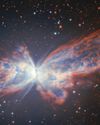
SEE THE BUTTERFLY NEBULA LIKE NEVER BEFORE
On 26 November 2025, the Gemini South telescope turned 25, and astronomers celebrated its birthday with a dazzling new image of the Butterfly Nebula.
1 min
Issue 211
How It Works UK
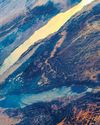
The Gulf of Suez is pulling apart
The Gulf of Suez, which partially divides Africa and Asia, may still be widening 5 million years after we thought it had stopped.
2 mins
Issue 211
How It Works UK
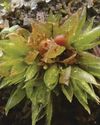
Moss survived for nine months on the outside of the International Space Station
Moss spores have survived a prolonged trip to space. The spores spent nine months on the outside of the ISS before returning to our planet, and over 80 per cent of the spores were still able to reproduce when they arrived back on Earth.
2 mins
Issue 211
How It Works UK
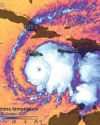
SATELLITE CAPTURES THE DESTRUCTIVE POWER OF HURRICANE MELISSA
In October 2025, Hurricane Melissa roared ashore in Jamaica, leaving behind a trail of destruction that's still being tallied.
1 min
Issue 211

How It Works UK
People that use AI likely overestimate their abilities
When asked to evaluate how good we are at something, we tend to get that estimation completely wrong. It's a universal human tendency, with the effect seen most strongly in those with lower levels of ability. Called the Dunning-Kruger effect after the psychologists who first studied it, this phenomenon means people who aren't very good at a given task are overconfident, while people with high ability tend to underestimate their skills. It's often revealed by cognitive tests that contain problems to assess attention, decision-making, judgment and language.
2 mins
Issue 211
How It Works UK
Scientists pull up riches from the ‘Holy Grail of shipwrecks’
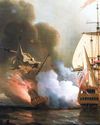
Valuable shipwrecked treasures are seeing the light of day after they sank along with the San José galleon off the coast of Colombia more than 300 years ago. The incredibly well-preserved items that were retrieved, including a cannon, a porcelain cup and three coins, are just a taste of the wreck's vast riches. The galleon is often dubbed 'the Holy Grail of shipwrecks' as it went down with a huge cargo of 180 tonnes of gold, silver and gems that was said to be worth around £13.5 billion ($18.2 billion) in 2018. The recovery is part of an ongoing project by the Colombian government to investigate the wreck and recover the precious artefacts. The recovery of the objects “opens the possibility for citizens to approach, through material testimony, the history of the San José galleon,” said Alhena Caicedo Fernández of the Colombian Institute of Anthropology and History.
1 mins
Issue 211

How It Works UK
LASERS TARGET THETARANTULA NEBULA WITH 'ARTIFICIAL STARS'
In November 2025, the Very Large Telescope (VLT) used its powerful interferometer, the VLTI, as part of its GRAVITY+ upgrade.
1 min
Issue 211
How It Works UK
Human refuse is ‘kick-starting’ the domestication of raccoons
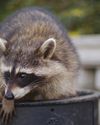
City-dwelling raccoons are showing early signs of domestication. Using photos uploaded to the citizen science platform iNaturalist, researchers found that raccoons in urban environments had shorter snouts than their rural counterparts. The difference could be one of several traits that make up 'domestication syndrome', the scientists wrote in a study published in the journal Frontiers in Zoology. Domesticated animals typically become less aggressive towards humans over time. They gradually develop a relationship in which people provide for them in exchange for resources, such as meat and milk from livestock or labour from herding dogs. That process often involves selectively breeding animals for certain desirable traits, but it doesn't always begin that way. \"I wanted to know if living in a city environment would kick-start domestication processes in animals that are currently not domesticated,\" said Raffaela Lesch, a zoologist at the University of Arkansas at Little Rock.
1 mins
Issue 211
Listen
Translate
Change font size