Poging GOUD - Vrij
INSIDE PICKETT'S CHARGE
History of War
|Issue 143
On 3 July 1863 a Confederate regiment – the 19th Virginia Infantry – marched into the jaws of Hell in one of the most infamous events in American military history
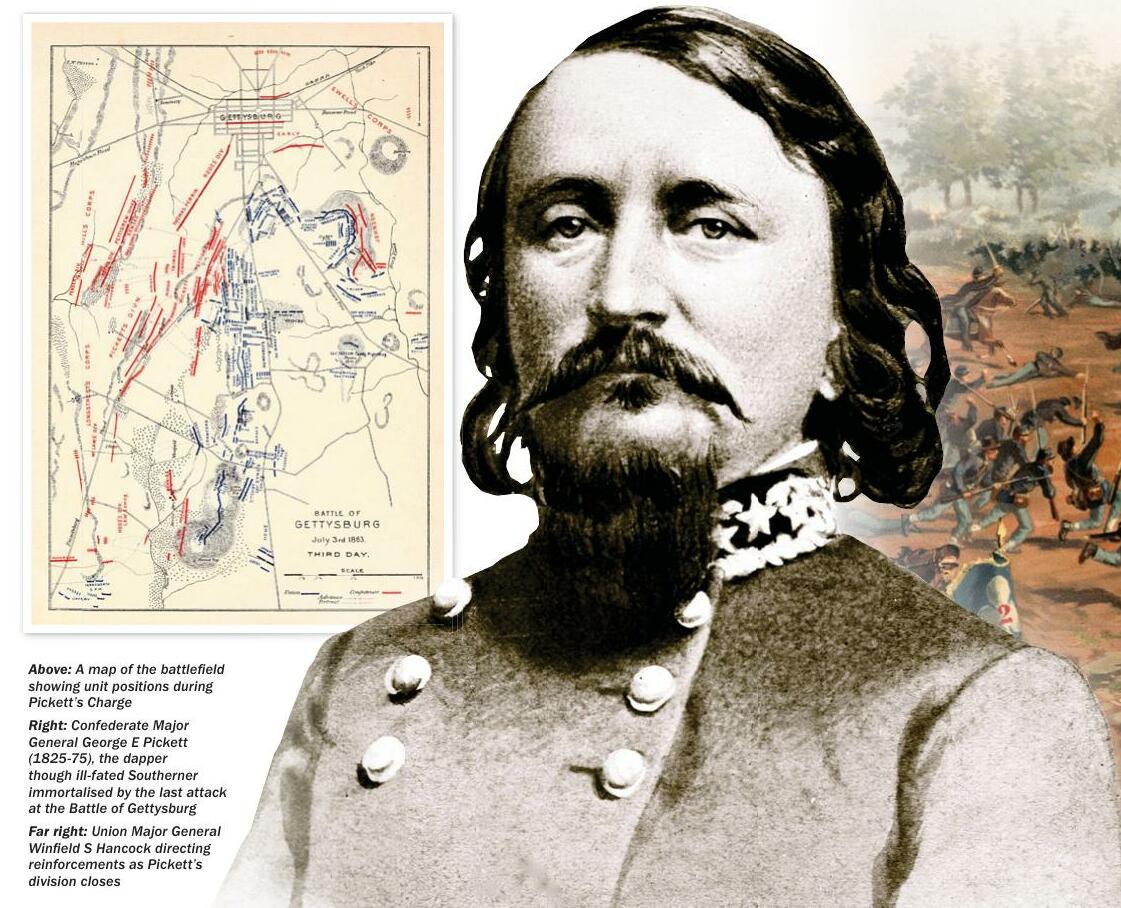
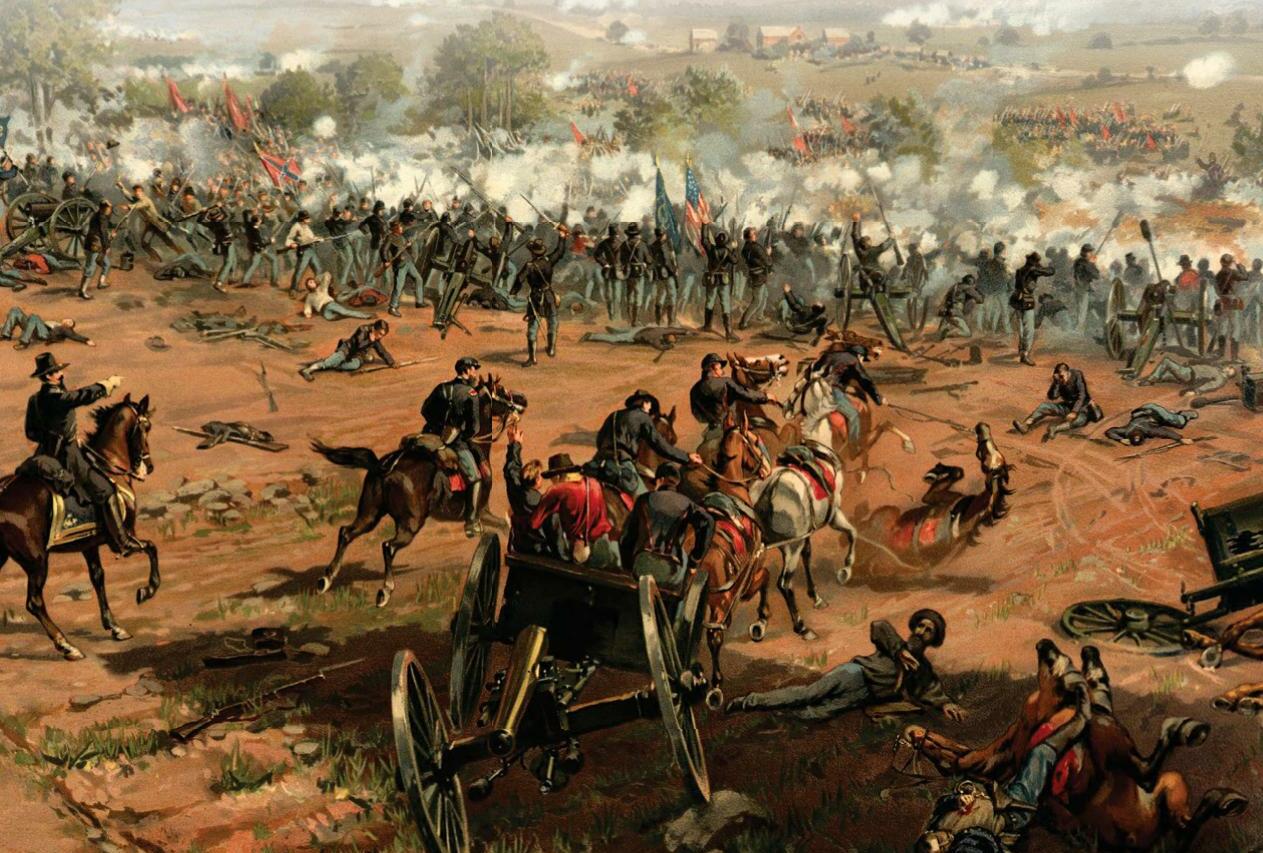
It was the afternoon of the third day. Vicious fighting had already consumed the first two days of that hot July, and the fatalities still lay about as grim, blackened reminders of the horrible work at hand. As the artillery fire subsided, 12,000 Confederates in grey and butternut formed quickly under battle flags of crimson and blue. When they advanced, the Confederate regiments marched quietly and confidently, their lines perfectly dressed. "I have never since the war began seen troops enter a fight in such splendid order," wrote correspondent Jonathan Albertson. Then the Federal artillery opened up on them.
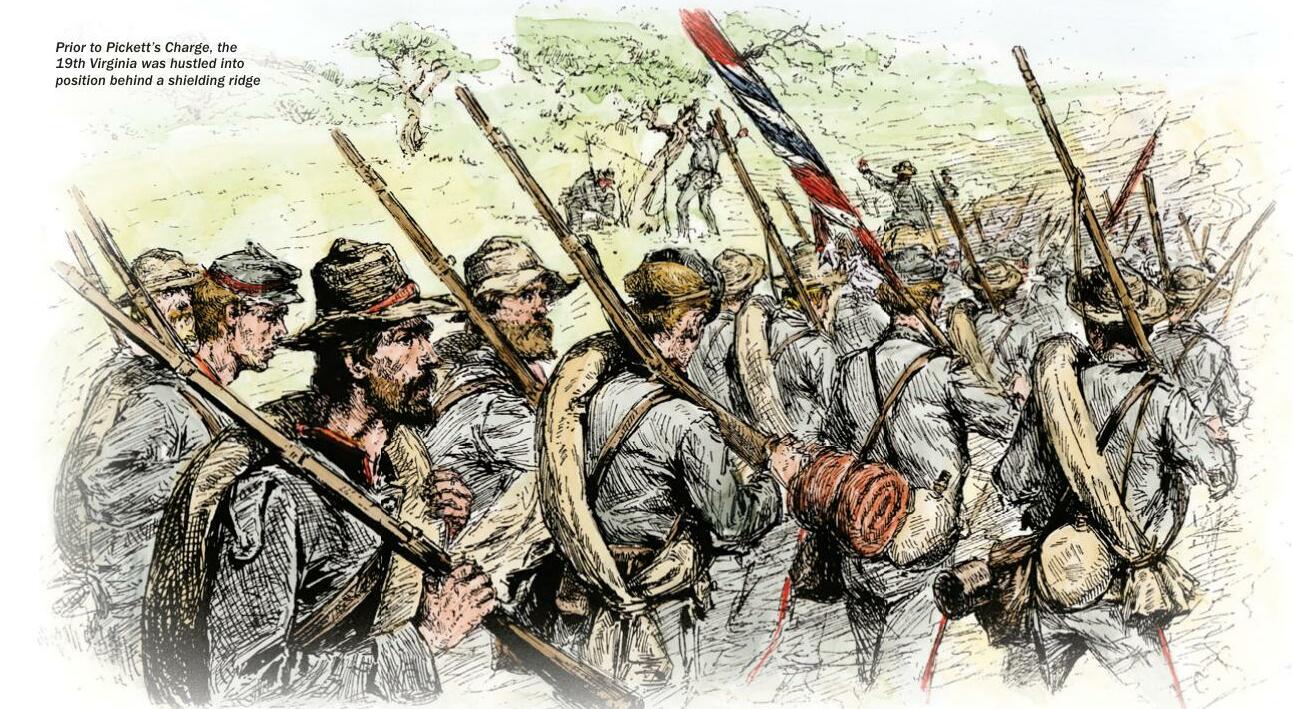 Pickett's Charge at the Battle of Gettysburg on 3 July 1863 is arguably the most infamous infantry assault in American military history, the 'high-water mark of the Confederacy'. That afternoon, Confederate Major General George E Pickett's Virginia Division attacked across open fields against a strong Federal position on Cemetery Ridge. In Brigadier General Richard B Garnett's brigade of that division, 426 Confederates traversed that valley of death as the 19th Virginia Infantry. This is their story.
 Organised in May 1861, the 19th Virginia Infantry Regiment served in the 'Gamecock Brigade' led by the 46-year-old Garnett, an 1841 West Point graduate who had served in the Seminole War in Florida. Garnett's Gamecocks and two other like-sized brigades comprised Pickett's 6,000-man force. Like Garnett, Pickett had attended West Point, graduating at the bottom of the 1846 class.

Dit verhaal komt uit de Issue 143-editie van History of War.
Abonneer u op Magzter GOLD voor toegang tot duizenden zorgvuldig samengestelde premiumverhalen en meer dan 9000 tijdschriften en kranten.
Bent u al abonnee? Aanmelden
MEER VERHALEN VAN History of War
History of War
BATTLE FOR THE CHANNEL ISLANDS
In 1945, the Allies were ready with a daring amphibious operation to liberate Jersey and Guernsey by force

8 mins
Issue 152
History of War
THE BOYNE
Three crowns were on the line when two kings met in Ireland on a sweltering summer's day
11 mins
Issue 152
History of War
PARIS DAVIS
This pioneering member of the United States Army Special Forces received long-overdue recognition for his heroism rescuing comrades during the Vietnam War
6 mins
Issue 152
History of War
FALL OF THE SPARTANS
The powerful Greek city-state overreached itself and saw its influence decline as it failed to integrate conquered territories
4 mins
Issue 152
History of War
MASTERS OF THE SKIES
From rapidly evolving roles to new technologies, historian and airpower expert John Curatola discusses how fighter planes shaped the Second World War
9 mins
Issue 152
History of War
TEA WITH TRAITORS
A progressive educator celebrated her birthday with a tea party for dissident friends – unaware that a Gestapo informant was among them
9 mins
Issue 152
History of War
CHURCHILL IN THE TRENCHES
How Britain's future war leader earned respect and redemption on the Western Front
13 mins
Issue 152
History of War
"MORE DANGEROUS THAN THE 1950S"
Do we need to relearn the Cold War's fear of mutually assured destruction in our unregulated nuclear landscape?
3 mins
Issue 152
History of War
CRIMEA IN THE CROSSHAIRS
The Black Sea peninsular has been coveted by rival interests for centuries, with the current Russian occupation motivated by several factors
5 mins
Issue 152
History of War
ON THE BRINK
Any conflict between the US and China would almost certainly see the American mainland come under direct attack
3 mins
Issue 152
Listen
Translate
Change font size