
Ga onbeperkt met Magzter GOLD
Krijg onbeperkte toegang tot meer dan 9000 tijdschriften, kranten en Premium-verhalen voor slechts
Flint: Our Rock of Ages
Rock&Gem Magazine
|July 2024
Used Since the Dawn of Humanity

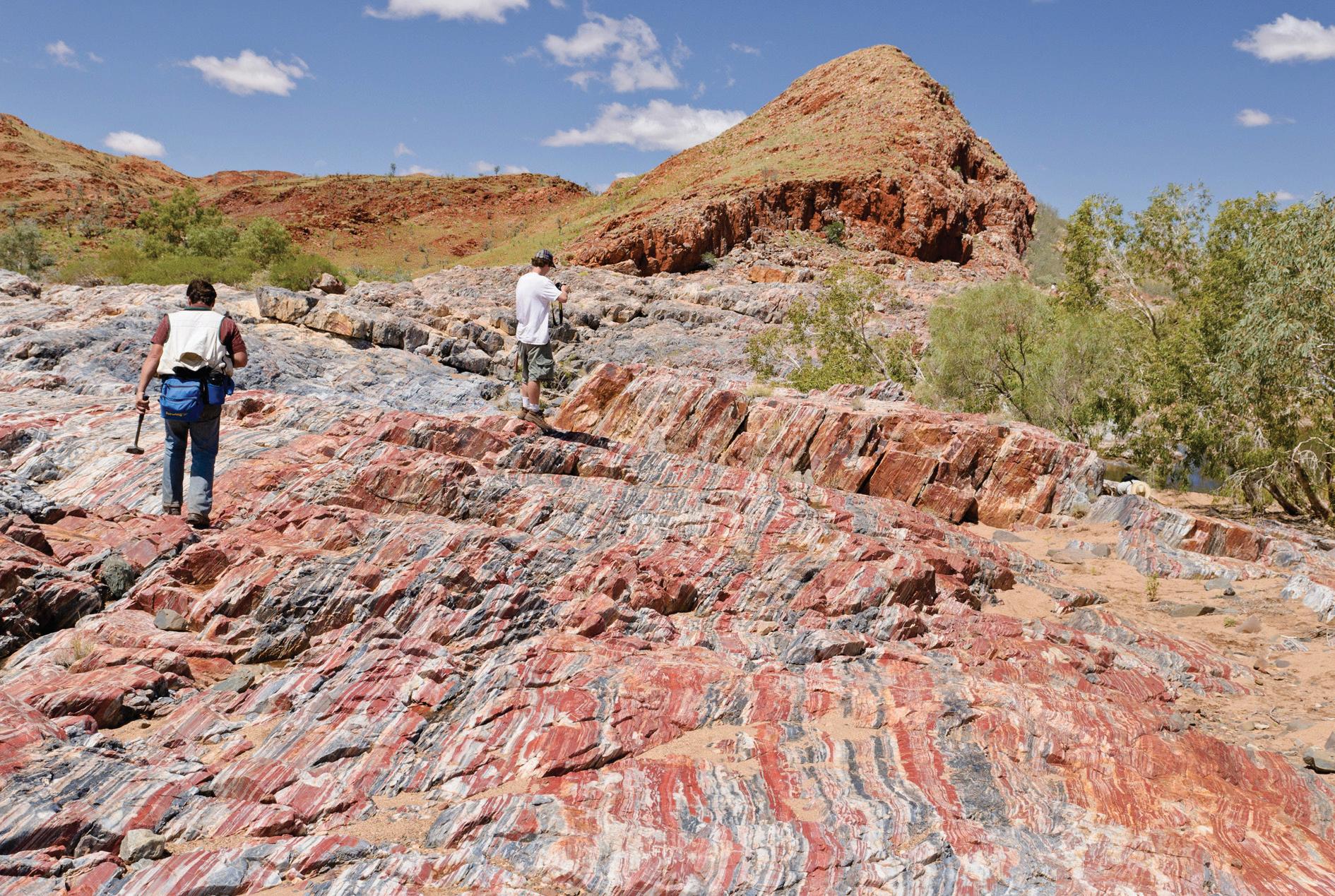
In today's world, we sometimes forget that during most of humankind's existence, the most critical material was stone-and that the most widely used type was flint (also called chert). Readily available, extraordinarily durable, and eminently workable, flint was the first mineral commodity to be systematically mined and traded. Vital to early human survival and development, it is truly our "rock of ages."
Although no longer of major economic or technological importance, flint still captures the attention of geologists, paleontologists, archaeologists, historians and lapidaries. The word "flint" also appears in the names of many topographical features, towns, and even a national monument. Two states honor flint as their official gemstone or rock.
FLINT OR CHERT?
The words "flint" and "chert" refer to the same fine-grained, chemical-sedimentary rock. Geologists favor "chert," while historians and paleontologists prefer "flint." Archaeologists consider chert as the raw material from which flint artifacts are made. Some writers use "flint" for nodules and "chert" for bedded occurrences. Others consider flint a dark variant of chert or a high-grade chert with finer grain and superior workability. This article uses both terms depending on geological or historical contexts.
Flint is an impure form of chalcedony, which consists of interlocked, microscopic crystals of quartz (silicon dioxide, SiO2). Because it is impure and varies in composition, flint is technically a rock. Its main impurities are mogánite (hydrous silicon dioxide) and related forms of hydrated silica.
PROPERTIES & OCCURRENCE

Dit verhaal komt uit de July 2024-editie van Rock&Gem Magazine.
Abonneer u op Magzter GOLD voor toegang tot duizenden zorgvuldig samengestelde premiumverhalen en meer dan 9000 tijdschriften en kranten.
Bent u al abonnee? Aanmelden
MEER VERHALEN VAN Rock&Gem Magazine
Rock&Gem Magazine
A New Amber Locality Fills a Gap
A sandstone quarry in central Ecuador has yielded the first significant deposit of Mesozoic amber from South America.

1 min
January / February 2026
Rock&Gem Magazine
Did "Left-Handed" Fish Leave Water Earlier than Thought?
Fossil evidence suggests that fish (or \"fishapods\") dragged themselves onto land during the middle Devonian Period.
1 min
January / February 2026

Rock&Gem Magazine
"Lab Quakes” Produce Surprising Results
When faults let loose and earthquakes result, the main effect we mortals experience is the violent shaking.
1 min
January / February 2026
Rock&Gem Magazine
This Egg is No Spring Chicken
How to date a dino egg
1 min
January / February 2026
Rock&Gem Magazine
Have we Already Mined the Critical Minerals We Need
Then why are we throwing them away?!
1 min
January / February 2026
Rock&Gem Magazine
One Toxic Worm
A critter that creates & tolerates orpiment!
1 min
January / February 2026
Rock&Gem Magazine
ROCK & GEM FIELD GUIDE: Silver
Silver (Ag) is a native element and one of Earth's most prized precious metals.
2 mins
January / February 2026
Rock&Gem Magazine
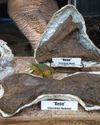
DINOSAURS OF THE HELL CREEK MUSEUM
In the Badlands of South Dakota, just outside the small town of Belle Fourche—pronounced “Bell Foosh”—a new attraction has taken shape that every dinosaur enthusiast should see. The Dinosaurs of the Hell Creek Museum is part hands-on exhibit, part science center and part active research lab.
3 mins
January / February 2026
Rock&Gem Magazine
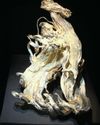
The Lost Twins of Kongsberg
A Silver Story Resurfaced
3 mins
January / February 2026
Rock&Gem Magazine
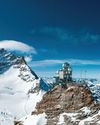
Switzerland's ICE PALACE
Walk Inside a Glacier at The Top of Europe
7 mins
January / February 2026
Listen
Translate
Change font size