
Ga onbeperkt met Magzter GOLD
Krijg onbeperkte toegang tot meer dan 9000 tijdschriften, kranten en Premium-verhalen voor slechts
Poging GOUD - Vrij
"I refute it thus"
Philosophy Now
|December 2024 / January 2025
Raymond Tallis kicks immaterialism into touch.

Readers may be familiar with Bishop George Berkeley’s (in)famous claim that objects exist only insofar as they are perceived. From this it follows that reality consists only of minds and their ideas. Ordinary objects such as cups and saucers and tables and chairs are bundles or collections of ideas, and their being consists in their being perceived by a mind. There is no hidden, mind-independent stuff called ‘matter’. When Berkeley (1685-1753) was questioned as to how objects could continue to be when no-one was perceiving them, he claimed they were still in the mind of God. God’s busy mind also explained how the properties of perceived objects would cluster in a coherent way: how, in the absence of matter, perceptions could still be bundled together into enduring things.
It’s no surprise that these ideas were widely rejected as absurd. Perhaps the most famous dismissal was issued by that standard-bearer for ‘stout common sense’, Dr Samuel Johnson of the original English Dictionary. According to his biographer James Boswell, after he and Johnson came out of church, they "stood talking for some time together of Bishop Berkeley's ingenious sophistry to prove the non-existence of matter and that everything in the universe is merely ideal. I shall never forget the alacrity with which Johnson answered, striking his foot against a large stone, till he rebounded from it: 'I refute it thus'."
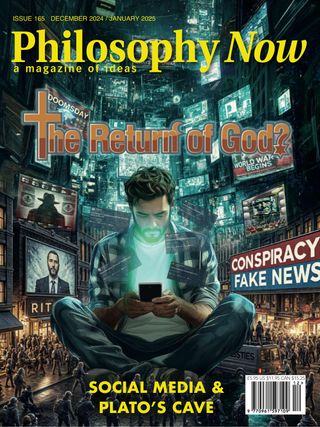

Dit verhaal komt uit de December 2024 / January 2025-editie van Philosophy Now.
Abonneer u op Magzter GOLD voor toegang tot duizenden zorgvuldig samengestelde premiumverhalen en meer dan 9000 tijdschriften en kranten.
Bent u al abonnee? Aanmelden
MEER VERHALEN VAN Philosophy Now

Philosophy Now
Nosferatu
Stefan Bolea considers two very different artistic approaches to love and death.

6 mins
April/May 2025

Philosophy Now
Heidegger's Ghost
Raymond Tallis wonders where Heidegger's body went when he was philosophising.
7 mins
April/May 2025

Philosophy Now
Is Comedy Good For Us?
Damaris Stock has a laugh with Plato and friends.
10 mins
April/May 2025
Philosophy Now
In Defense of Idleness
Wendell O'Brien says, 'Just Don't Do It'.
10 mins
April/May 2025

Philosophy Now
Leaving Nothing to Chance by Carl Knight
LEAVING NOTHING TO Chance (2025) by Carl Knight, is an informed, proficient and lucid defence of luck egalitarianism.
3 mins
April/May 2025

Philosophy Now
Star Maker by Olaf Stapledon
THE 1937 SCIENCE FICTION novel Star Maker was written by philosophy professor Olaf Stapledon in the dark days as Europe awaited the onslaught of Nazi Germany. This casts a shadow over the whole book.
6 mins
April/May 2025
Philosophy Now
Love & Emptiness in the Sufi Tradition
Medha Ninad Tambe meditates on Rumi, love and self-negation.
7 mins
April/May 2025

Philosophy Now
The Hedgehog's Dilemma: A Metaphor About the Challenges of Human Intimacy
Krishna Chaubey explains Arthur Schopenhauer's poignant thought experiment.
4 mins
April/May 2025
Philosophy Now
The Mirror & the Flame
Rebwar Fatah imagines Attar's & Hegel's shared path.
4 mins
April/May 2025
Philosophy Now
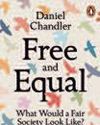
Free and Equal by Daniel Chandler
DANIEL CHANDLER, AN economist and philosopher based at the London School of Economics, begins Free and Equal: What Would a Fair Society Look Like? (2023) by asking an intriguing question. How is it, he wonders, that the most influential political philosopher of the last century has had almost no practical impact on politics or policy? The philosopher in question is John Rawls, whose magnum opus was A Theory of Justice (1971).
5 mins
April/May 2025
Listen
Translate
Change font size