Poging GOUD - Vrij
WHAT ARE HEADACHES?
How It Works UK
|Issue 200
From shooting sensations to dull aches, we explore the many causes of pain around the brain

The term headache covers a great variety of symptoms. Some are mild, caused by bright lights or muscle tension. Others can be debilitating and erupt in a sudden attack. Almost everyone will experience a headache in their lifetime, and although they can be brought on by more serious conditions, usually they’re not overly worrisome.
There are more than 150 types of headaches, each categorised as primary or secondary. Primary headaches are those that aren’t caused by another medical condition. Instead, they are the result of physiology in the head – such as muscles and nerves – being over-used or not working as they typically would. For example, physical activity can cause exertion headaches, hunger headaches are caused by stress hormones from a drop in blood sugar and tension headaches are a result of knots in muscles in your head and neck.
Secondary headaches are a symptom of another condition. Dehydration and sinus infections can lead to a less severe form of secondary headache. But some secondary headaches are more painful and can be an indication of bleeding in the brain, a traumatic head injury or a sudden rise in blood pressure.
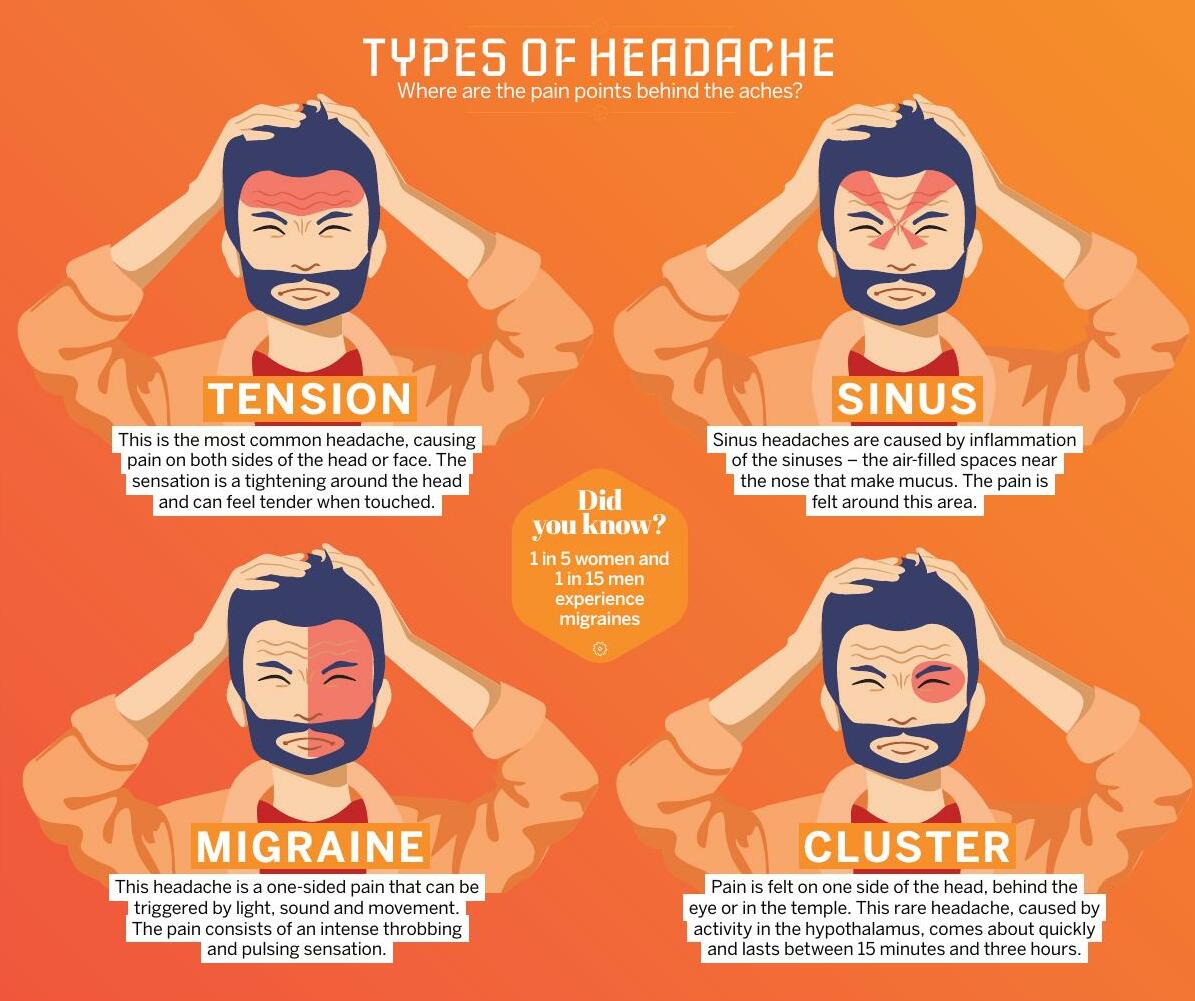 It is useful to know what symptoms are unusual in order to seek medical advice. If you have a sudden, new or especially painful headache, you should get it checked out. Other headaches with the potential to be more damaging are those that occur after a head injury, those accompanied with a fever or shortness of breath and headaches that are new to a person over the age of 55.
 NO-PAIN BRAIN
Nociceptors are the nerve endings that detect pain. There are none of these pain receptors in the brain, meaning that the organ itself doesn't feel pain. The brain can't directly sense damage to its own tissue.

Dit verhaal komt uit de Issue 200-editie van How It Works UK.
Abonneer u op Magzter GOLD voor toegang tot duizenden zorgvuldig samengestelde premiumverhalen en meer dan 9000 tijdschriften en kranten.
Bent u al abonnee? Aanmelden
MEER VERHALEN VAN How It Works UK
How It Works UK
20 WEARABLE HEALTH TRACKERS
Whether you strap a wellness coach to your wrist or weave subtle sensors into your clothes, these devices are revolutionising how we track our health

9 mins
Issue 210
How It Works UK
SUPERPOWERED PLANTS
The world of plants is vibrant and diverse, just like this book.
1 min
Issue 210
How It Works UK
SECRET STORIES OF LOST BEASTS
We're all aware of the mighty dinosaurs that once roamed Earth, but there are so many weird and wonderful species that have been lost to time.
1 min
Issue 210

How It Works UK
ALL ABOUT BLIMPS
Is it a bird? Is it a spaceship? No... it's a non-rigid airship
2 mins
Issue 210
How It Works UK
SUPER QUESTERS MISSION: RAINFOREST MAGIC
Join adventurers Leo, Lilli and Bea as they transform into superheroes and journey to the rainforest in the pursuit of knowledge.
1 min
Issue 210

How It Works UK
HOW THE MIGHTY MAMMOTH RULED THE ICE AGE
Meet the prehistoric giants that roamed the Arctic Circle thousands of years ago
4 mins
Issue 210
How It Works UK
Have they found LIFE ON MARS?
Although it's by no means certain, scientists are slowly accumulating evidence that life once existed on the Red Planet
2 mins
Issue 210

How It Works UK
HOW FAST DO GLACIERS MOVE?
The speed at which a glacier flows depends on its mass, the depth and slope of the underlying rock bed and friction.
1 min
Issue 210

How It Works UK
HOW IN-FLIGHT WI-FI WORKS
This technology allows you to scroll to your heart's content while killing time at cruise altitude
3 mins
Issue 210

How It Works UK
HOW WIGWAMS WERE BUILT
Discover the construction and living conditions inside these traditional domed dwellings
1 mins
Issue 210
Listen
Translate
Change font size