
Go Unlimited with Magzter GOLD
Get unlimited access to 10,000+ magazines, newspapers and Premium stories for just
Try GOLD - Free
“What unites these commanders Is selt-beliet. It they didn't have faith in themselves, no one else would”
BBC History UK
|December 2022
AL MURRAY tells Spencer Mizen about his new book profiling 10 military leaders whose experiences shine a light on the Allies’ extraordinary transformation in the Second World War

Spencer Mizen: It's safe to say that when writing a history of the Second World War, you're entering a pretty crowded field. So what does your new book, Command, bring to the party?
Al Murray: One of the things that's striking about the Second World War is that the Allies get off to a terrible start. And then, at the end, they won a crushing, total victory. How on Earth did that happen in six years? That's the question I wanted to answer in this book.
The answer people often give is: "Well, it's because of industry, and it's a war of engines." That's basically what Stalin said. And, to an extent, he was right. You've got three Allied economies bigger than the German economy, and those economies were able to use their abundance of machinery to batter Germany into submission.
But the thing about pummelling people into submission is you've still got to figure out how to do it and then you've still got to persuade people to do it. You've got to have the right people in place to do it. You've got to organise your men, you need to figure out how to use intelligence and react to what's unfolding in front of you. And that's the bit I've tried to write about. At the beginning of the war, the Allies were hopeless at all this; by the end of the conflict, they were really, really good at fighting. They didn't win this war simply by muddling through and outgunning the Germans. I think they learned lessons. And I've tried to trace that transformation via 10 commanders - from the generals at the top of the food chain, all the way down to a lieutenant fighting alongside his men on the front line.
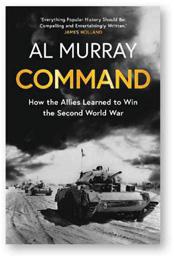
Command: How the Allies Learned to Win the Second World War
By Al Murray (Headline, 352 pages, £20)
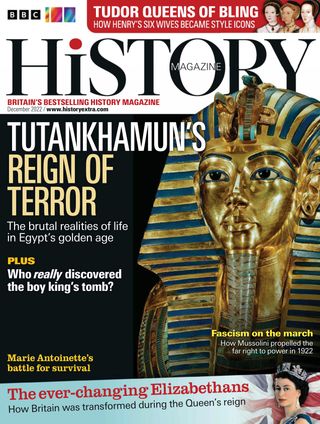

This story is from the December 2022 edition of BBC History UK.
Subscribe to Magzter GOLD to access thousands of curated premium stories, and 10,000+ magazines and newspapers.
Already a subscriber? Sign In
MORE STORIES FROM BBC History UK

History Extra
Personal stories
Few shows have enjoyed the longevity of Who Do You Think You Are? and it's easy to understand why it has endured.

1 min
June 2026

History Extra
Tidal change
Southern mythos notwithstanding, there exists no static, exceptional American South.
1 mins
June 2026

History Extra
Marriage story
Emily Howes on her novel about Catherine Dickens' relationship with her famous husband
1 mins
June 2026
History Extra
Sexual her-story
A witty, wide-ranging account of the myths and power structures behind female sexuality impresses SARAH JONES
2 mins
June 2026

History Extra
History man
According to Tom Hanks, during his childhood 'The War' was a recurring topic in the conversations of the adults around him.
1 min
June 2026
History Extra
How to be a master of disguise
10 do's and don'ts when attending a masquerade
2 mins
June 2026

History Extra
Age of indulgence
Our content producer Charlotte Vosper picks episodes of the HistoryExtra podcast about Georgian Britain
1 min
June 2026
History Extra
Gaffer tape
While Bobby Robson and Gareth Southgate both led England to World Cup semi-finals, Alf Ramsey remains the only manager to actually win the trophy.
1 mins
June 2026
History Extra
What's the origin of the Fosbury Flop?
Like the Salchow in ice skating, the Fosbury Flop is a sport technique that immortalises the name of its creator.
1 min
June 2026

History Extra
EXHIBITIONS
In 1776, the United States of America was born - heralded by the Declaration of Independence.
1 min
June 2026
Translate
Change font size