Denemek ALTIN - Özgür
Civil Society - August 2019
Magzter GOLD ile Sınırsız Olun
Okumak Civil Society sadece bir abonelikle 9.000'den fazla diğer dergi ve gazeteyle birlikte
Kataloğu GörüntüleYalnızca Civil Society dergisine abone olun
İstediğiniz zaman iptal edebilirsiniz.
(Hiçbir Taahhüt Yok) ⓘAbonelikten memnun kalmazsanız, aboneliğin başlangıç tarihinden itibaren 7 gün içinde help@magzter.com adresine e-posta göndererek tam para iadesi alabilirsiniz. Soru sorulmaz - Söz veriyoruz! (Not: Tek sayı satın alımları için geçerli değildir)
Dijital Abonelik
Anında Erişim ⓘMagzter web sitesi, iOS, Android ve Amazon uygulamalarında anında okumaya başlamak için hemen abone olun.
Doğrulanmış Güvenli
ödeme ⓘMagzter, doğrulanmış bir Authorize.Net satıcısıdır. Daha Fazla Bilgi Edinin
Bu sayıda
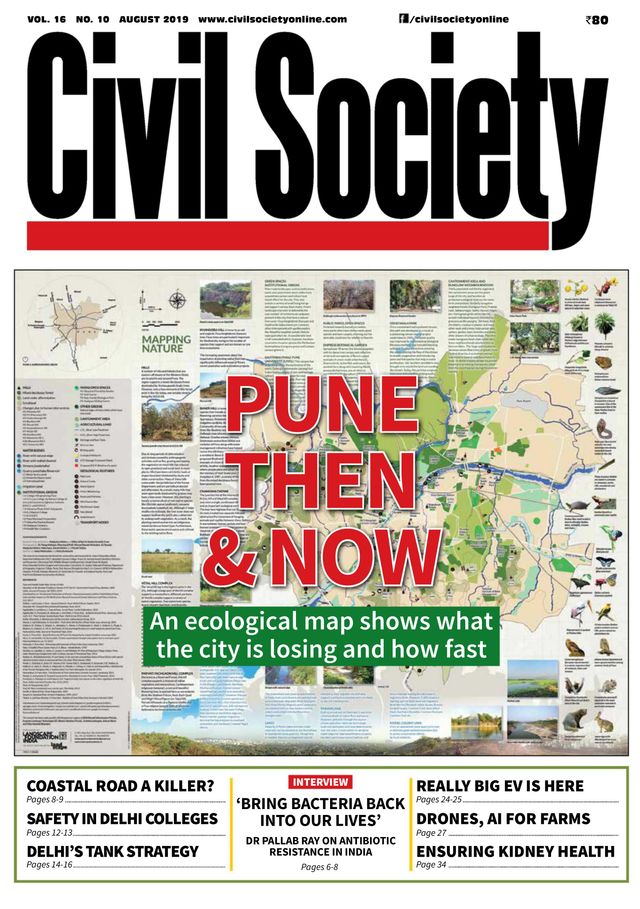
Cities have a major role to play in India’s economy, but there is little that we can say we reliably know about them. Most cities have grown this way and that and problem has been piled upon problem. Over time, urban India has ended up being a gooey mess. In the absence of a contemporary urban vision and information that captures the rapid changes taking place, cities in India seem to be generally headed nowhere.
There is also a dire lack of expertise in government which must shape urban spaces so that they are inclusive and accessible to everyone. It is a dismal picture and especially worrying because cities elsewhere in the world are drivers of growth and prosperity. From them come innovations and new technologies. India is being left behind.
The ecological map of Pune featured as our cover story is a good example of the watchful eye that can be kept on Indian cities. Cities that lose their green cover and natural systems are invariably in a kind of trouble that is both difficult and expensive to fix. Nature is an essential component of urban living for both the poor and rich alike. Keeping river systems, water bodies and forests alive is important. The Pune map comes from the Landscape Foundation India. The maps are important because they look at nature and history. We should know what is falling or has fallen off a city’s map.
The Delhi government’s plan for reviving tanks and lakes is an example. In an interview Ankit Srivastava, technical advisor to the Delhi Jal Board, tells us that more than a hundred water bodies are being revived in an effort to raise groundwater levels in Delhi.
We are also happy to present Dr Pallab Ray who has just recently headed a study on antibiotic resistance in microbial organisms. The problem is a serious one, but Dr Ray tells us it is not unmanageable. Education and regulation can restore order over time. We need antibiotics for sure, but we also need microbes. Once again fitting into what nature intended is the solution.
Civil Society Description:
Civil Society is an independent magazine published from New Delhi.
It was launched in September 2003 to tell stories of change from across the chaotic landscape of post-reforms India.
A newly growing economy has winners and losers — as journalists we wanted to tell the stories of those who were making it and as well as those who were getting left behind.
In the past 15 years, Civil Society has come to be known for its refreshing style of covering people, events and trends. We are credited with redefining mainstream concerns in the Indian media.
Civil Society's reportage has brought to national attention individuals and groups who play leadership roles and drive change but get overlooked. We have shown that there is an India that exists beyond prime time.
This has been possible because we moved out of big media jobs to create a small and efficient enterprise through which journalists could look for stories where it may not be fashionable to look for them.
A democracy thrives on credible information. Small media entities, freed up from the demands of big capital, allow journalists to innovate and explore new frontiers. A large and complex country like India needs more alternative voices.
Started with just Rs 4 lakhs (about $6,000) of personal savings, one small car and a single computer, Civil Society has shown that it is possible for professional journalists with skills and clear values to build influential enterprises in the media.
Son sayılar

July 2020
June 2020

May 2020

April 2020
March 2020
February 2020
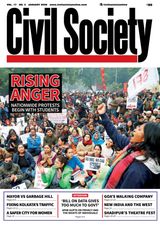
January 2020

December 2019
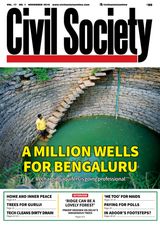
November 2019
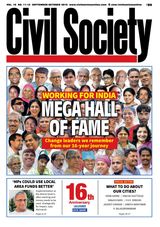
September - October 2019
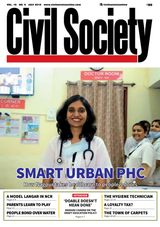
July 2019
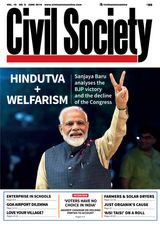
June 2019

May 2019
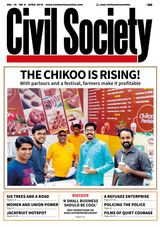
April 2019
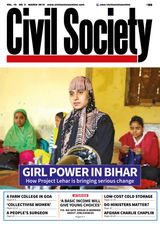
March 2019

February 2019

January 2019
İlgili Başlıklar

Hindustan Times

The Free Press Journal
The Statesman
Millennium Post Delhi

Hindustan Times Mumbai
Hindustan Times Bengaluru

Hindustan Times Pune

Hindustan Times Chandigarh

Hindustan Times Gurugram

Hindustan Times Lucknow

Hindustan Times Patna

Hindustan Times Noida

Hindustan Times Jaipur

Hindustan Times Ranchi
Hindustan Times Navi Mumbai
Hindustan Times Uttarakhand
Hindustan Times East UP

Hindustan Times Ludhiana
Hindustan Times Thane
Hindustan Times Haryana

Hindustan Times Punjab
Hindustan Times Rajasthan
Hindustan Times West UP

Hindustan Times Jammu

Hindustan Times Amritsar
The Daily Guardian

The Sunday Guardian
Mint Ahmedabad
First India Jaipur
Free Press School Mumbai