Denemek ALTIN - Özgür
System-on-Module Technology Key IoT Enabler - High-Performance Computing Systems Packed into Compact Form Factors
Circuit Cellar
|February 2025
System-on-Module (SoM) technology is gaining traction across various industries, driven by the demand for compact, integrated solutions that allow developers to add AI and connectivity options as demands evolve. Explore the factors fueling the SoM growth and the advantages these modules offer.

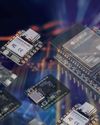
In the era when inferencing is needed precisely where information is being collected and processed, it's important to remember that the latency of the cloud is the most important aspect of Artificial Intelligence that system designers want to remove from their system performance equations. How else could we bring massive amounts of computing performance closer to the action than with a system-on-module (SoM) technology? It can deliver multiple terra operations per second (TOPS) right where the application needs it most, according to the literature supporting many of the datasheets profiled here.
On the following pages, you will see SoMs from AAeon, Axiomtek, BeagleBoard, Nvidia, Toradex, Variscite, SolidRun, and even the latest Raspberry Pi CM5.
Processors steal the spotlight of many SoMs, and here, you'll find representatives from Intel, AMD, NXP, Broadcom, and Nvidia. If you see processor vendors here that aren't usually associated with PC platforms, they were most like likely selected for efficiency and longetivity.
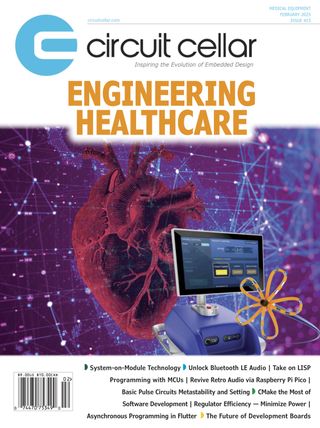

Bu hikaye Circuit Cellar dergisinin February 2025 baskısından alınmıştır.
Binlerce özenle seçilmiş premium hikayeye ve 9.000'den fazla dergi ve gazeteye erişmek için Magzter GOLD'a abone olun.
Zaten abone misiniz? Oturum aç
Circuit Cellar'den DAHA FAZLA HİKAYE

Circuit Cellar
Inside the Tech: E-Bikes Explained
The Future of Product Developement Nature

5 mins
March 2026
Circuit Cellar
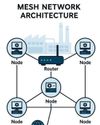
Mesh for Embedded Control
Mesh Networks Are Rewiring Embedded Systems
11 mins
March 2026

Circuit Cellar
A System That Detects, Tracks, and Deters Deer
Using Computer Vision, an Arduino, and a Raspberry Pi 5
14 mins
March 2026

Circuit Cellar
Analog Meets Digital
Part 4: Eliminating Mains Interference with an ADC
19 mins
March 2026

Circuit Cellar
Datasheet: Linux-Based SBCs
SBCs Running Linux Bring Enterprise Power to the Network's Edge
8 mins
March 2026
Circuit Cellar
Running Model Trains Without Human Input
A Raspberry Pi Pico Controls Two Trains
9 mins
March 2026

Circuit Cellar
Connector Requirements for High-Voltage Healthcare Applications
Simplifying Safety and Security
9 mins
March 2026
Circuit Cellar
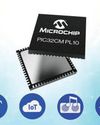
PIC32CM PL10 MCUs Expand Microchip's ARM Cortex-MO+ Portfolio
Building on decades of experience, Microchip Technology has added PIC32CM PL10 MCUs to its PIC32C family of ARM Cortex-M0+ core devices. PL10 MCUs feature a rich set of Core Independent Peripherals (CIPs), 5V operation, touch capabilities, integrated toolsets and safety compliance.
1 mins
March 2026

Circuit Cellar
From Buffer Overflows to Control Flow Attacks
This article extends the January 2026 article by showing a buffer overflow attack that changes a return value. I also discuss the use of the GCC stack protection feature, and demonstrate that it's not always a bulletproof protection method, even if it is better than doing nothing.
7 mins
March 2026
Circuit Cellar
Another Matter-Enabled MCU: the ESP32-C6
The list of MCUs that support the Matter protocol continues to get longer. In this column, Brian goes in-depth on one of the newer Matter-enabled MCUs and shows just how it compares to some of the alternatives now on the market.
21 mins
March 2026
Listen
Translate
Change font size