
Magzter GOLD ile Sınırsız Olun
Sadece 9.000'den fazla dergi, gazete ve Premium hikayeye sınırsız erişim elde edin
Denemek ALTIN - Özgür
SWEET DREAMS ARE MADE OF THESE
Kitchen Garden
|March 2025
Instagrammer Olga Grieves is passionate about growing sweet peas. This month she shares her favourite varieties and explains how to create a stunning display
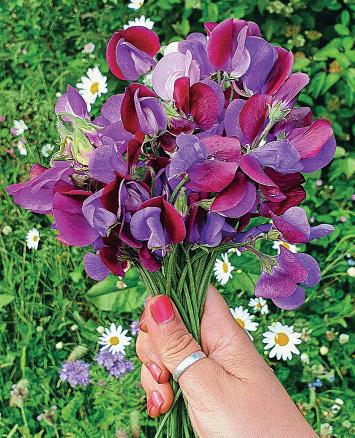
Did you know sweet pea seeds first arrived in England in 1699 from Sicily, thanks to a Sicilian monk named Francesco Cupani? We've come a long way since then but the history of the varieties that now grace our gardens and allotments is fascinating.
When buying seeds certain names crop up repeatedly. If, like me, you're an obsessive flower sniffer and a devoted sweet pea grower you'll have spotted names like Cupani, Grandiflora, Spencer, Lathyrus odoratus, and Henry Eckford. But what do they mean, and why are they important?
In botany names often link to people, places, or events, revealing the plant's history. Henry Eckford, a Scottish horticulturist, ignited a sweet pea frenzy in the 1800s by dedicating his life to improving and crossbreeding them. He created the grandiflora type, which produce very fragrant flowers. Most modern sweet peas stem from his work. His most famous creation, 'Painted Lady', has striking red and white flowers with a sensational scent.
Silas Cole, who was a gardener at the Spencer estate, was another sweet pea enthusiast - he grew many of Henry Eckford's varieties and one summer he managed to grow a very tall, flamboyant and frilly sweet pea, which he called 'Countess Spencer'. After exhibiting it in 1901 at the Sweet Pea Society's first annual show, everyone wanted to grow what we know today as Spencers.


Bu hikaye Kitchen Garden dergisinin March 2025 baskısından alınmıştır.
Binlerce özenle seçilmiş premium hikayeye ve 9.000'den fazla dergi ve gazeteye erişmek için Magzter GOLD'a abone olun.
Zaten abone misiniz? Oturum aç
Kitchen Garden'den DAHA FAZLA HİKAYE

Kitchen Garden
THE NATIONAL VEGETABLE SOCIETY GUIDE TO SHOWING
CHOOSING THE BEST VARIETIES FOR THE SHOW BENCH

4 mins
May 2026

Kitchen Garden
PLANTS FOR PREDATORS
Dr Anton Rosenfeld of Garden Organic explains why predators matter and the plants needed to help bring them to your garden
3 mins
May 2026
Kitchen Garden
MAY DAYS DELIGHT
As April gives way to May, the garden begins to surge ahead. Sarah Purser captures that turning point, when plans start to take shape and the season gathers real momentum
3 mins
May 2026

Kitchen Garden
STRAWBERRIES WITH FLAVOUR
Enjoy sweet, flavour-packed crops with these high- quality, cold-stored strawberry plants from Pomona Fruits, selected for taste, yield and reliability
1 mins
May 2026

Kitchen Garden
PICK TEAR EAT
Anna Cairns Pettigrew cuts what's ready, using leaves, herbs and new potatoes to create quick, generous and tasty plates
3 mins
May 2026
Kitchen Garden
THE RIGHT STUFF
Becky Searle explains how choosing the right mulch for your soil type can transform structure, moisture retention and long-term fertility, helping you get better results for much less effort
5 mins
May 2026

Kitchen Garden
CELERY & CELERIAC - WORTH A SECOND LOOK
Martin Fish shows how to grow celery and celeriac with simple, reliable methods from seed to harvest
3 mins
May 2026

Kitchen Garden
ON THE PLOT THAT PROVED THEM WRONG
Two decades on from a sceptical start, Carolyn Goodliff has transformed a neglected plot into a productive, beautiful space – and built a community around it
4 mins
May 2026
Kitchen Garden
How everything can have a use
This month Stephanie Hafferty is exploring permaculture principle five - putting what we've already got to hand to use on the plot
4 mins
May 2026
Kitchen Garden
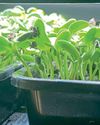
Leggy seedlings
Warmth, low light and a bit too much kindness can all lead to leggy seedlings at this time of year. They stretch, weaken and topple just when you want them to be building strength. The good news is they're rarely a lost cause – and a few simple adjustments will get them back on track
1 min
May 2026
Listen
Translate
Change font size