
Magzter GOLD ile Sınırsız Olun
Sadece 9.000'den fazla dergi, gazete ve Premium hikayeye sınırsız erişim elde edin
Denemek ALTIN - Özgür
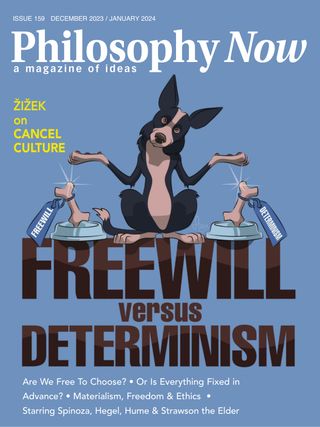
Parrhesia & Doing Philosophy with Children
Philosophy Now
|December 2023 / January 2024
Maria daVenza Tillmanns considers the need for freedom of speech for children.

‘Congress shall make no law respecting an establishment of religion, or prohibiting the free exercise thereof; or abridging the freedom of speech, or of the press…’
(The First Amendment to the U.S. Constitution, 1787)
The term parrhesia first appeared in Greek literature in the Fifth Century BC. It took on many different meanings, but generally, it referred to the notion of speaking freely and frankly. The most famous example of frank speech in ancient Greece is perhaps when Alexander the Great visited Diogenes of Sinope and asked him what he wanted, wishing to grant him a favour. Diogenes replies by asking him to move a little to the side, in order to stop blocking his sunlight. More broadly, parrhesia refers to speaking one’s own sense of truth in the face of power. As (possibly) Voltaire so poignantly states: “If you want to know who controls you, look at who you are not allowed to criticize.” In other words, it isn’t for you to question or criticize those who have power over you. In Discourse and Truth: The Problematization of Parrhesia (1983), Michel Foucault says that “parrhesia is a verbal activity in which a speaker expresses his personal relationship to truth for which he is willing to risk his life because he recognizes truth-telling as a duty to improve or help other people (as well as himself). In parrhesia, the speaker uses his freedom and chooses frankness instead of persuasion, truth instead of falsehood or silence, the risk of death instead of life and security, criticism instead of flattery, and moral duty instead of self-interest and moral apathy” (p.5).
There was also a form of

Bu hikaye Philosophy Now dergisinin December 2023 / January 2024 baskısından alınmıştır.
Binlerce özenle seçilmiş premium hikayeye ve 9.000'den fazla dergi ve gazeteye erişmek için Magzter GOLD'a abone olun.
Zaten abone misiniz? Oturum aç
Philosophy Now'den DAHA FAZLA HİKAYE

Philosophy Now
The Possibility- Bearing Animal
Raymond Tallis explores a twilight zone.

7 mins
February/March 2026

Philosophy Now
Amazing Times at the Pub Agora
John Douglas Mullen is a philosophical bar fly on the wall.
8 mins
February/March 2026

Philosophy Now
Friedrich Nietzsche (1844-1900)
Hilarius Bogbinder considers the all too human life of the notorious iconoclast.
11 mins
February/March 2026

Philosophy Now
Heisenberg's Philosophy of Quantum Mechanics
Kanan Purkayastha explains how Werner Heisenberg's 1925 paper turned the quantum theory of the early 1900s into the quantum mechanics of today.
10 mins
February/March 2026
Philosophy Now
Cicero & the Ideal of Virtue
Abdullah Shaikh explores Cicero's ideas about the core Roman principle of virtus.
13 mins
February/March 2026

Philosophy Now
ROPE
Les Jones has a Nietzschean take on a Hitchcock thriller.
6 mins
February/March 2026
Philosophy Now
What Have the Romans Ever Done For Us?
Salve! This issue's theme is Roman Philosophy. But as the rebels in Monty Python's Life of Brian asked, what have the Romans ever done for us? The question seems relevant here; we are philosophers, not archaeologists.
2 mins
February/March 2026

Philosophy Now
Paul Guyer
Paul Guyer is an American philosopher and a leading scholar of both Immanuel Kant and aesthetics. AmirAli Maleki interviews him about Kant's political and moral vision.
9 mins
February/March 2026
Philosophy Now
Identity in the Age of Connectivity
Sara Asran explores the dynamics of identity online.
6 mins
February/March 2026
Philosophy Now
A Very Short History of Critical Thinking
Luc de Brabandere summarises a long history through key figures of thought.
7 mins
February/March 2026
Translate
Change font size