Denemek ALTIN - Özgür
KIDS ARE THE KEY TO UNDERSTANDING OBESITY. BUT WE NEED MORE OF THEIR GENES
BBC Science Focus
|December 2023
We can unravel the role that bodyweight plays in disease, but we need a bigger, more diverse, sample of genetic material to do so
-

When I was a young postdoctoral researcher at Cambridge in 2002, a colleague took me to a fancy dinner at Peterhouse College, the oldest of Cambridge's colleges.
It was a six-course affair and, rather ridiculously, you had to change seats (and hence dinner companions) for each new course. During the first course, an older, bearded professor sitting opposite me asked, "So young man, what do you do?" I told him I was working on the genetics of childhood obesity.
"Ha! Do you know what your problem is?" he replied. "You give fat people an excuse." The disgust in his tone threw me and as I mobilised all my diplomatic nous to gently push back, I was saved by a literal bell, signalling that we had to switch seats for course number two.
It occurred to me later that the professor's view was shared by much of society. Obesity is seen as a problem of physics; people just need to eat less and move more. But although how we get to our body weight is reliant on physics, the real question is why? Why do people behave so differently toward food? Why do some people respond to stress by eating more and others by eating less? Why do some people love food, while for others it's simply fuel? Why, what, when and how much we eat have powerful societal and cultural underpinnings.


Bu hikaye BBC Science Focus dergisinin December 2023 baskısından alınmıştır.
Binlerce özenle seçilmiş premium hikayeye ve 9.000'den fazla dergi ve gazeteye erişmek için Magzter GOLD'a abone olun.
Zaten abone misiniz? Oturum aç
BBC Science Focus'den DAHA FAZLA HİKAYE

BBC Science Focus
HEALTH: Eating oats could lower your cholesterol in just two days
The health benefits of a two-day porridge diet lasted for weeks afterwards

1 mins
April 2026

BBC Science Focus
Most people are too sure they can identify fake human faces
Even 'super recognisers' struggle with the challenge. Can you do better?
1 min
April 2026

BBC Science Focus
WHAT'S THE WORST THING YOU CAN DO FOR THE PLANET ONLINE?
Human beings can barely move a muscle without some kind of deleterious effect on the environment around us.
2 mins
April 2026
BBC Science Focus
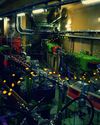
A bug in the system
The complex arrangement of equipment you see here is part of a particle accelerator.
1 min
April 2026
BBC Science Focus
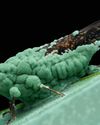
Snug as a bug in a rug
At first glance, you might feel envious of this little leafhopper, swaddled beneath the folds of what appears to be a luxurious fur blanket.
1 min
April 2026
BBC Science Focus
WHY DO WE ROOT FOR THE VILLAIN IN MOVIES?
Whether it's Darth Vader or Cruella de Vil, we all have a favourite movie villain.
1 mins
April 2026

BBC Science Focus
A TURN TO DISPERSE
Why a fart walk after dinner does more than release your gas
3 mins
April 2026

BBC Science Focus
Hatching a nebula
Welcome to the Egg Nebula, an enigmatic structure formed by ejected stardust in the Cygnus constellation around 1,000 light-years from Earth.
1 min
April 2026

BBC Science Focus
7 TIMES AI GOT IT SPECTACULARLY WRONG
For the past four years, AI has been reshaping how we work and live. But its failures are proving just as transformative as its triumphs
8 mins
April 2026

BBC Science Focus
CHARLES ADCOCK, VIA EMAIL: COULD DARK MATTER BE ALL AROUND PLANET EARTH BUT UNDETECTABLE?
Astronomers have gathered overwhelming evidence that 80 per cent of all matter in the Universe is invisible.
1 min
April 2026
Translate
Change font size