
Magzter GOLD ile Sınırsız Olun
Sadece 9.000'den fazla dergi, gazete ve Premium hikayeye sınırsız erişim elde edin
Denemek ALTIN - Özgür
AGAINST THE GRAIN
Down To Earth
|March 16, 2025
India's two most valuable timbers-sandalwood and red sanders-have long been bound by restrictive regulations designed to curb illegal trade. Encouraged by the government decades ago with promises of windfall profits, farmers took to commercial cultivation, investing years of patience and effort. Now, as they prepare to harvest, a harsh reality is setting in-the promise of big profits is not quite holding up. HIMANSHU NITNAWARE travels to 19 villages across Karnataka, Andhra Pradesh and Telangana to explore the reasons
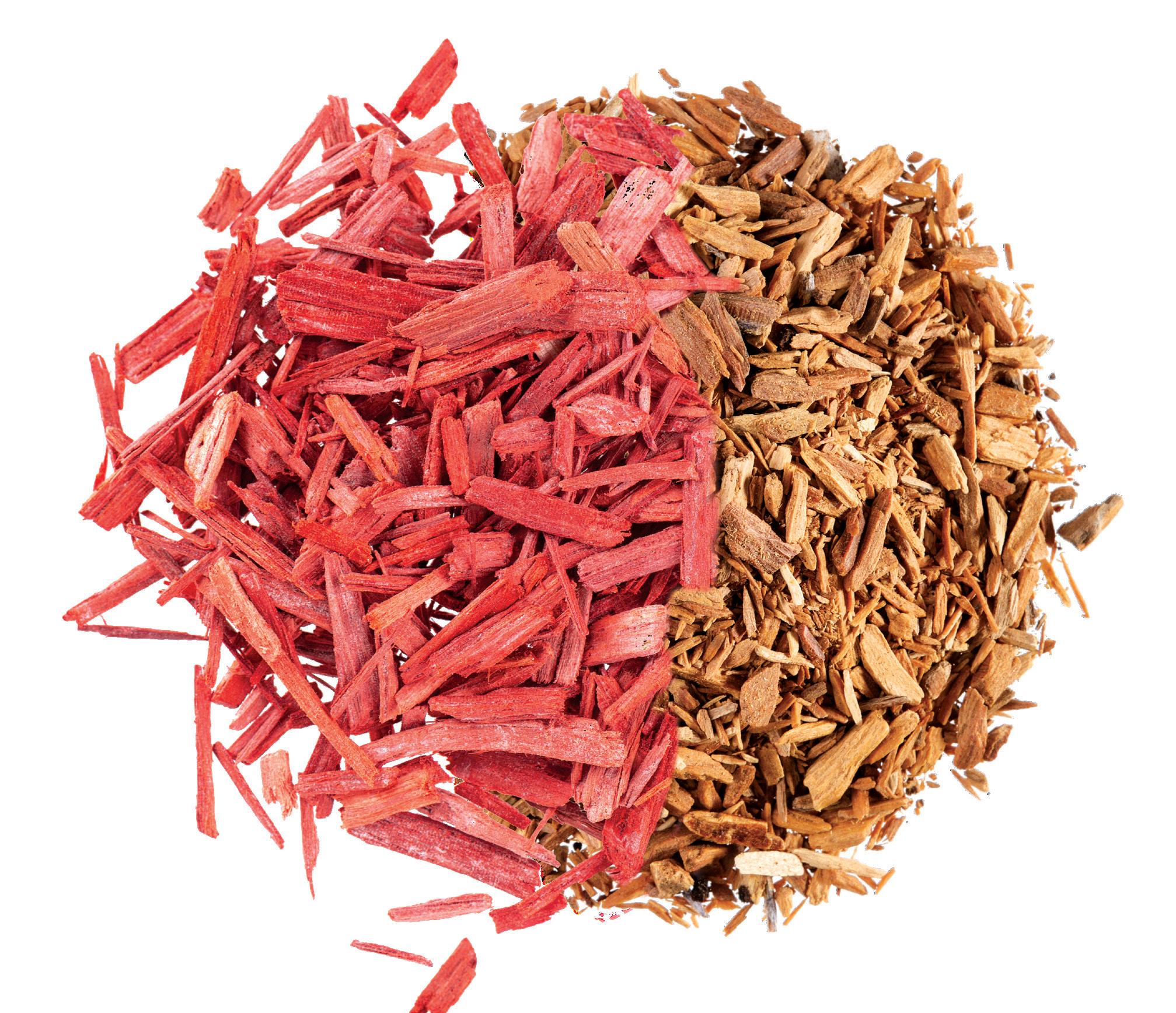
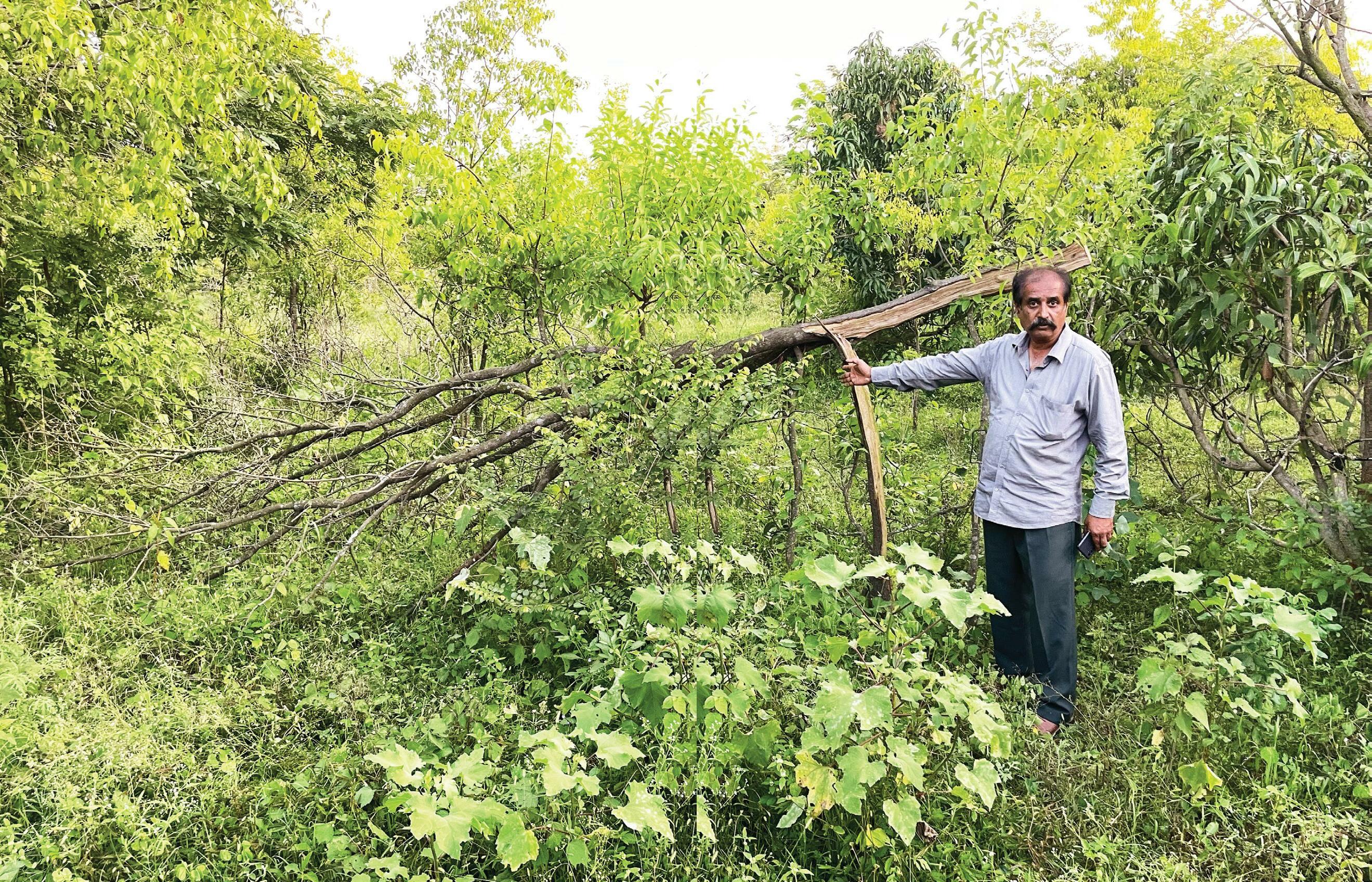
IN 2009, when K Sharanappa planted 1,000 sandalwood saplings across his 2.8-hectare (ha) farm, he was not just growing trees-he was staking his future on a once-forbidden trade. Indian sandalwood (Santalum album), one of the country's most commercially valuable tree species, is worth its weight in gold.
High-quality Indian sandalwood fetches up to ₹78 lakh per tonne (1,000 kg), earning it the nickname "dollar-earning parasite" in international markets. For Sharanappa, a resident of Karnataka's Adapura village in Koppal district, the plan was simple: in 15 years, the trees would mature, earning him a projected ₹4 crore-an amount several hundred times his modest salary as a police officer with the state government. "I timed it with my retirement in 2023. I would be financially secure and my sons would inherit a thriving business," he says.
"But it has now become a burden," he adds.
His voice, once filled with hope, now carries the weight of disillusionment.
Sharanappa is among the first group of sandalwood growers in Karnataka, home to almost 60 per cent of India's natural extent of sandalwood, according to a study published in Discover Applied Sciences in November 2024. He took up cultivation after Karnataka loosened its iron grip on the timber's trade two decades ago. In 1792, the erstwhile Mysore state declared it as the "Royal Tree". Since then, the harvesting and sale of sandalwood remained a government monopoly. Even if a tree grew naturally on private land, the owner had no rights over it-yet was responsible for its protection.

Bu hikaye Down To Earth dergisinin March 16, 2025 baskısından alınmıştır.
Binlerce özenle seçilmiş premium hikayeye ve 9.000'den fazla dergi ve gazeteye erişmek için Magzter GOLD'a abone olun.
Zaten abone misiniz? Oturum aç
Down To Earth'den DAHA FAZLA HİKAYE

Down To Earth
SOME OVERLOOKED ASPECTS
Increasing night-time temperatures and rapid intensification of cyclones already happening

1 min
November 16, 2025

Down To Earth
Excessive groundwater extraction can cause subsidence
Subsidence is a global phenomenon seen not just in coastal regions, but also in inland areas. Natural subsidence progresses slowly, but anthropogenic activities, like excessive groundwater extraction, can significantly accelerate the rate, says LEONARD OHENHEN, assistant professor, department of earth system science, University of California, Irvine, US. In an interview with SUSHMITA SENGUPTA, Ohenhen says that climate change intensifies the problem through multiple pathways.
3 mins
November 16, 2025

Down To Earth
2025 IS UNPRECEDENTED
Never heard about so many such exceptional rainfall events as have occurred this year
1 min
November 16, 2025

Down To Earth
GOVERNING THE CLOUDS
In the absence of evidence, replicability, funding and transparency, cloud seeding languishes as an imperfect science
6 mins
November 16, 2025

Down To Earth
Heavier footprints
Investments and capital owned by the world's wealthiest few are driving the climate crisis, according to a first-of-its-kind report
3 mins
November 16, 2025

Down To Earth
Views on the annual Delhi pollution debate
This is in response to the \"Photo of the day: A game of soccer in post-Diwali Delhi\" published on the website on October 21, 2025.
2 mins
November 16, 2025
Down To Earth
Climate change fuelled hurricane Melissa
ON OCTOBER 28, category 5 hurricane Melissa made landfall in Jamaica with maximum sustained wind speeds of 298 km per hour (kmph), making it one of the strongest hurricanes in the North Atlantic Ocean.
1 min
November 16, 2025

Down To Earth
ICAR's claims exposed by its own data
Why has ICAR flouted crop testing rules and ignored data red flags to push gene-edited rice strains that will not benefit farmers?
4 mins
November 16, 2025
Down To Earth
COMMUNITY RIGHTS BEFORE RELOCATION
Union tribal ministry releases policy document on rights of communities in tiger reserves marked for relocation
2 mins
November 16, 2025

Down To Earth
Stork sanctuary
Villages in Uttar Pradesh mount efforts to protect painted storks and inspire a conservation movement
2 mins
November 16, 2025
Listen
Translate
Change font size