
Mit Magzter GOLD unbegrenztes Potenzial nutzen
Erhalten Sie unbegrenzten Zugriff auf über 9.000 Zeitschriften, Zeitungen und Premium-Artikel für nur
Versuchen GOLD - Frei
How to Invest for a Recession
Kiplinger's Personal Finance
|September 2022
A sharp decline in the stock market is often an indicator of an impending recession-that is, a temporary period of economic decline. With the S&P 500 index falling 1,000 points, or about one-fifth, from January through June, a consensus is emerging that a recession is coming, perhaps next year.

Recessions have wildly varying durations and depths. The official judge is the National Bureau of Economic Research, which counts nine of them since 1960, lasting an average of about a year. Recent recessions have been the result of severe shocks to the system: the 2008 financial crisis and the 2020 pandemic. The COVID recession was the shortest in history (two months) but the most intense (gross domestic product down by nearly one-third).
A 2022 or 2023 recession will be very different. If it happens, it will follow a more traditional pattern, triggered by the Federal Reserve Board raising interest rates sharply as a way to reduce consumer and business demand to tame inflation. For investors, there are three important facts about recessions:
They are uncertain. The Fed raised rates nine times from late 2015 to late 2018 without triggering a recession. Nobel Prize-winning economist Paul Samuelson once famously quipped that the stock market had predicted nine of the last five recessions. Economists have a poor record, too, though two-thirds of them, including Samuelson's nephew Larry Summers, expect one next year.
They end. This is a critical point for long-term investors, who should keep buying stocks on a regular basis. Using a process called dollar-cost averaging, you can invest a set amount at regular intervals when stocks are cheaper, you can afford more shares.
They deliver opportunities. Finally, there is little shelter in the stock market from recessions, but at the same time, they offer remarkable opportunities.
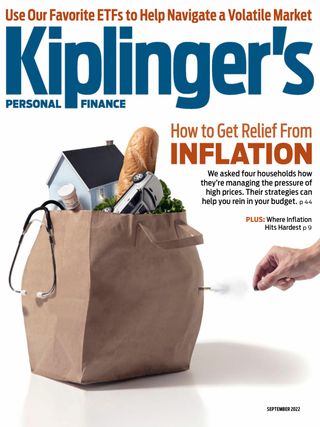

Diese Geschichte stammt aus der September 2022-Ausgabe von Kiplinger's Personal Finance.
Abonnieren Sie Magzter GOLD, um auf Tausende kuratierter Premium-Geschichten und über 9.000 Zeitschriften und Zeitungen zuzugreifen.
Sie sind bereits Abonnent? Anmelden
WEITERE GESCHICHTEN VON Kiplinger's Personal Finance

Kiplinger's Personal Finance
A TAX BREAK FOR MEDICAL EXPENSES
The editor of The Kiplinger Tax Letter responds to readers asking about health care write-offs.

2 mins
February 2026

Kiplinger's Personal Finance
Volunteering to Help Others at Tax Time
Through an IRS program, qualifying individuals can get free assistance with their tax returns.
2 mins
February 2026

Kiplinger's Personal Finance
CATCH-UP SAVERS FACE A TAXING 401(K) CHANGE
Under new rules, you may lose an up-front deduction but gain tax-free income once you retire.
2 mins
February 2026

Kiplinger's Personal Finance
The Case for Emerging Markets
Economic growth, earnings acceleration and bargain prices favor EM stocks.
3 mins
February 2026

Kiplinger's Personal Finance
THE NEW RULES OF RETIREMENT
Popular guidelines about how to save, invest and spend need to be updated and personalized to ensure you'll never run out of money.
15 mins
February 2026

Kiplinger's Personal Finance
Smart Ways to Share a Credit Card
Adding an authorized user has its benefits, but make sure you set the ground rules.
2 mins
February 2026

Kiplinger's Personal Finance
THE BEST AFFORDABLE FITNESS TRACKERS
These devices monitor your exercise, sleep patterns and more- and they don't cost an arm and a leg.
4 mins
February 2026
Kiplinger's Personal Finance
A VALUE FOCUS CLIPS RETURNS
THERE'S more to Mairs & Power Growth than its name implies. The managers favor firms with above-average earnings growth. But a durable, competitive position in their market- “a number-one or number-two position and gaining share,” says comanager Andrew Adams—and a reasonable stock price matter even more.
1 mins
February 2026

Kiplinger's Personal Finance
Look Beyond the Tech Giants
I am hooked on a podcast called Acquired, in which two smart guys do a deep analytical dive, typically lasting three or four hours, on a single successful company such as Coca-Cola or Trader Joe's. Ben Gilbert and David Rosenthal, a pair of venture capitalists, are especially adept at explaining what's behind the success of such tech giants as Alphabet (symbol GOOGL, $320), the former Google, which recently merited 11 hours and 42 minutes of dialogue all by itself.
4 mins
February 2026

Kiplinger's Personal Finance
How to Pay for Long-Term Care
A couple of months ago, I wrote that many Americans significantly underestimate how long they could live in retirement (see “Living in Retirement,” Dec.). With the possibility of a 30-year retirement becoming more common, retirees need to plan for so-called longevity risk to make sure their assets last a lifetime. And the longer you live, the more likely you'll need to pay for some form of long-term care. That can range from assistance with activities of daily living to in-home care to a nursing home stay.
2 mins
February 2026
Translate
Change font size