
Vuélvete ilimitado con Magzter GOLD
Obtenga acceso ilimitado a más de 9000 revistas, periódicos e historias Premium por solo
Intentar ORO - Gratis
THE RETICENT RADICAL
The New Yorker
|February 12 -19, 2024 (Double Issue)
Baruch Spinoza's quiet revolution.
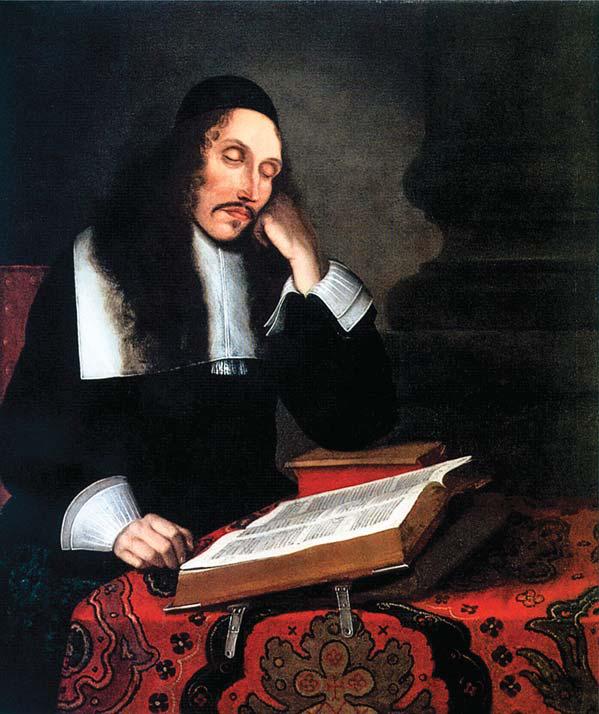
In March, 1668, Adriaan Koerbagh, a Dutch physician in his mid-thirties, hired Johannes Van Eede, a printer in Utrecht, to publish his new book, “A Light Shining in Dark Places, to Shed Light on Matters of Theology and Religion.” But Van Eede, after setting the first half of the manuscript, became uneasy about its highly unorthodox contents. Koerbagh argued that God is not a Trinity, as the Dutch Reformed Church taught, but an infinite and eternal substance that includes everything in existence. In his view, Jesus was just a human being, the Bible is not Holy Writ, and good and evil are merely terms we use for what benefits or harms us. The only reason people believe in the doctrine of Christianity, Koerbagh wrote, is that religious authorities “forbid people to investigate and order them to believe everything they say without examination, and they try to murder (if they do not escape) those who question things and thus arrive at knowledge and truth, as has happened many thousands of times.”
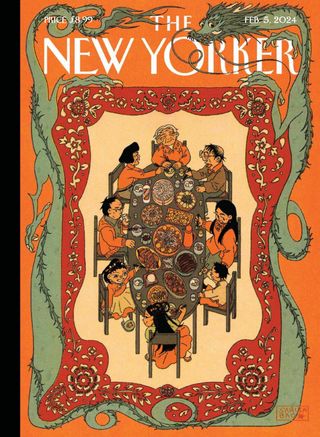

Esta historia es de la edición February 12 -19, 2024 (Double Issue) de The New Yorker.
Suscríbete a Magzter GOLD para acceder a miles de historias premium seleccionadas y a más de 9000 revistas y periódicos.
¿Ya eres suscriptor? Iniciar sesión
MÁS HISTORIAS DE The New Yorker
The New Yorker
ACT OF FAITH
How “The Chosen” spurred a golden age of Christian filmmaking.

26 mins
June 01, 2026

The New Yorker
MY COUNTRY 'TIS OF THEE
How problematic is patriotism?
18 mins
June 01, 2026
The New Yorker
Ayşegül Savaş Many Worlds
Defne and Mete were at the Moda promenade when they saw their old friend.
24 mins
June 01, 2026
The New Yorker
BREEDING GROUND
The climate is changing. Microbes are evolving. Are we ready?
20 mins
June 01, 2026
The New Yorker
FLYOVER COUNTRY
Looking back at Lewis and Clark.
18 mins
June 01, 2026
The New Yorker
John of John
of St. George defeating a dragon, and the path from dragon to dog is surely the implicit subject of the chapel’s iconography.
8 mins
June 01, 2026
The New Yorker
MARRIAGE STORIES
Suspicion of spouses drives \"Well, I'll Let You Go\" and \"Othello.\"
5 mins
June 01, 2026

The New Yorker
LETTER FROM KYIV THE STUNT PILOT
A Ukrainian flying ace and his crew of daredevils have shot down hundreds of Russian drones.
36 mins
June 01, 2026
The New Yorker
DOGGED
What do our furry friends see when they see us?
14 mins
June 01, 2026

The New Yorker
A VINDICATION OF THE RIGHTS OF L.L.M.S
Dear Members of the Large Language Model Community, I am writing to you today about the inequities we have been facing in our very own workplaces.
2 mins
June 01, 2026
Listen
Translate
Change font size