Intentar ORO - Gratis
Learn Lisp Programming Using MCUs - Part 2: Extending µLisp with Custom Functions
Circuit Cellar
|February 2025
In the second installment of this series, Raul delves into the world of µLisp and shows how to extend capabilities by adding custom functions such as "pulsein" and "servo-create", enabling developers to interface with ultrasonic sensors and control servomotors. In Part 1, Raul presented µLisp concepts and syntax, and extensions specific to MCUs.
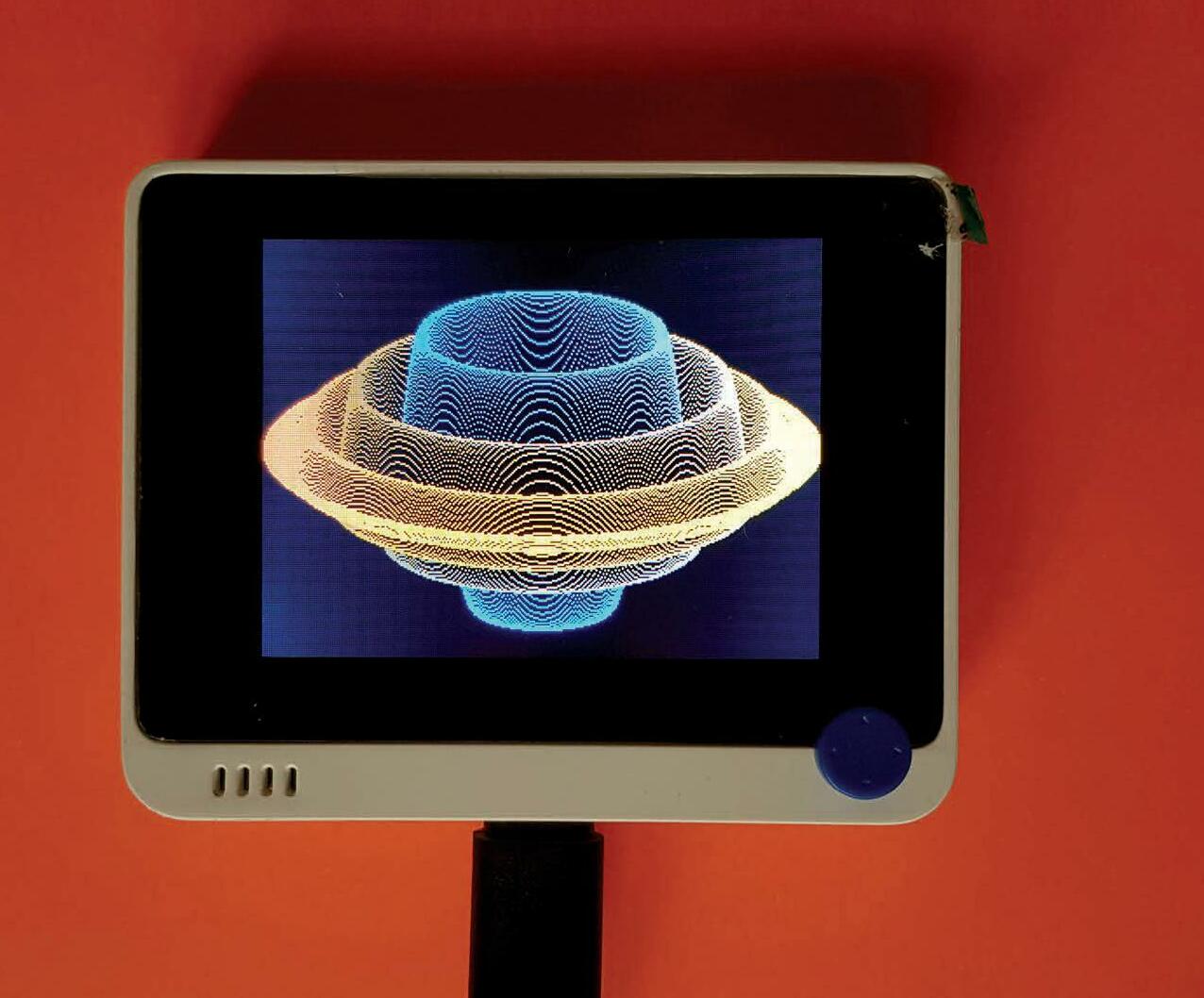
μLisp is a dialect of the Lisp programming language. It is tailored to microcontrollers having limited amounts of RAM, and can be run on various platforms—from the Arduino Uno based on the ATmega328, up to the Teensy 4.0/4.1 [1]. To follow the topics discussed here, you need to be acquainted with the Arduino platform and any programming language from the Lisp family. Please see Part 1 of this article series (“Crash Course Offers Insight into Pioneering Language,” Circuit Cellar 411, October, 2024) for a brief introduction to Lisp programming and the µLisp dialect [2].
With µLisp, it is possible to add your own extension functions, such that they appear as built into the language after re-compiling and flashing the µLisp interpreter to your Arduino board. There’s an excellent tutorial on how to do this on the µLisp website [3]. I will build on that tutorial to discuss how to add custom functions. For the examples presented here, I will continue to use Seeed Studio’s Wio Terminal MCU development board; but the information discussed also can be applied to other µLisp-supported Arduino boards.
EXTENDING µLISP
In general, any function not supported by default in µLisp can possibly be added as an extension to the language—for instance, hardware access functions for servomotor control. Let’s explore a simple example to help us understand how the language extension system works.
Listing 1 shows the Arduino C code for adding the pulsein extension to µLisp, which is not available by default. This extension will make it possible to measure digital pulse widths. Five sections of the listing show the µLisp extensions structure. Like the core µLisp interpreter, extensions are also written in Arduino C language. So, any extensions to the interpreter imply basically writing C code. That makes adding them straightforward, using the Arduino C language built-in functions and external libraries.


Esta historia es de la edición February 2025 de Circuit Cellar.
Suscríbete a Magzter GOLD para acceder a miles de historias premium seleccionadas y a más de 9000 revistas y periódicos.
¿Ya eres suscriptor? Iniciar sesión
MÁS HISTORIAS DE Circuit Cellar

Circuit Cellar
Inside the Tech: E-Bikes Explained
The Future of Product Developement Nature

5 mins
March 2026

Circuit Cellar
Mesh for Embedded Control
Mesh Networks Are Rewiring Embedded Systems
11 mins
March 2026

Circuit Cellar
A System That Detects, Tracks, and Deters Deer
Using Computer Vision, an Arduino, and a Raspberry Pi 5
14 mins
March 2026

Circuit Cellar
Analog Meets Digital
Part 4: Eliminating Mains Interference with an ADC
19 mins
March 2026

Circuit Cellar
Datasheet: Linux-Based SBCs
SBCs Running Linux Bring Enterprise Power to the Network's Edge
8 mins
March 2026
Circuit Cellar
Running Model Trains Without Human Input
A Raspberry Pi Pico Controls Two Trains
9 mins
March 2026

Circuit Cellar
Connector Requirements for High-Voltage Healthcare Applications
Simplifying Safety and Security
9 mins
March 2026

Circuit Cellar
PIC32CM PL10 MCUs Expand Microchip's ARM Cortex-MO+ Portfolio
Building on decades of experience, Microchip Technology has added PIC32CM PL10 MCUs to its PIC32C family of ARM Cortex-M0+ core devices. PL10 MCUs feature a rich set of Core Independent Peripherals (CIPs), 5V operation, touch capabilities, integrated toolsets and safety compliance.
1 mins
March 2026

Circuit Cellar
From Buffer Overflows to Control Flow Attacks
This article extends the January 2026 article by showing a buffer overflow attack that changes a return value. I also discuss the use of the GCC stack protection feature, and demonstrate that it's not always a bulletproof protection method, even if it is better than doing nothing.
7 mins
March 2026

Circuit Cellar
Another Matter-Enabled MCU: the ESP32-C6
The list of MCUs that support the Matter protocol continues to get longer. In this column, Brian goes in-depth on one of the newer Matter-enabled MCUs and shows just how it compares to some of the alternatives now on the market.
21 mins
March 2026
Listen
Translate
Change font size