
Passez à l'illimité avec Magzter GOLD
Obtenez un accès illimité à plus de 9 000 magazines, journaux et articles Premium pour seulement
Essayer OR - Gratuit
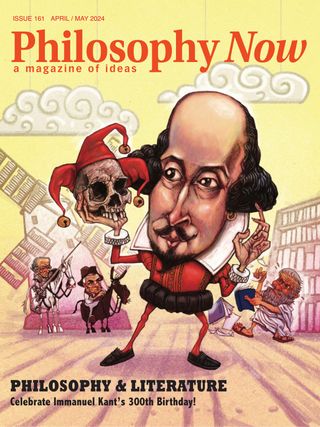
Don Quixote & Narrative Identity
Philosophy Now
|April / May 2024
Inés Pereira Rodrigues asks, are we always or ever) who we Say we are?

At some point in life, I venture to guess, we’ve all had suspicions about who someone claimed to be, being unconvinced by their story. There would have been something about how they presented themselves or the situation they were telling us about that was just not believable. Or perhaps we’ve watched, disconcerted, as someone we know well claimed to be the kind of person we’re quite sure they’re not.
The theory of ‘narrative identity’ tries to answer the question of how persons maintain their identity through time. It proposes that who we are is constituted by or formed from the stories we tell about ourselves. We make sense of the events and occurrences in our lives through story-telling, by weaving them into a coherent narrative, making ourselves the protagonists and assigning some supporting roles, and many extras. We make sense of who we are by telling this story to ourselves: our sense of self emerges – or so says French philosopher and literary critic Paul Ricoeur (1913-2005) in his 1992 book Oneself as Another. Among other things, it would mean that who we are, our identity, is not already given: we are not already essentially determined as being this or that person, as if our identity were a substantial core fully formed at (or before) birth that remained the same as we change through our lives in more superficial ways. Instead, it means that who we are is a continuous work of self-interpretation, which we both make and discover through these stories. This work of becoming is ongoing through our self-story-telling.

Cette histoire est tirée de l'édition April / May 2024 de Philosophy Now.
Abonnez-vous à Magzter GOLD pour accéder à des milliers d'histoires premium sélectionnées et à plus de 9 000 magazines et journaux.
Déjà abonné ? Se connecter
PLUS D'HISTOIRES DE Philosophy Now

Philosophy Now
Nosferatu
Stefan Bolea considers two very different artistic approaches to love and death.

6 mins
April/May 2025

Philosophy Now
Heidegger's Ghost
Raymond Tallis wonders where Heidegger's body went when he was philosophising.
7 mins
April/May 2025

Philosophy Now
Is Comedy Good For Us?
Damaris Stock has a laugh with Plato and friends.
10 mins
April/May 2025
Philosophy Now
In Defense of Idleness
Wendell O'Brien says, 'Just Don't Do It'.
10 mins
April/May 2025
Philosophy Now
Leaving Nothing to Chance by Carl Knight
LEAVING NOTHING TO Chance (2025) by Carl Knight, is an informed, proficient and lucid defence of luck egalitarianism.
3 mins
April/May 2025

Philosophy Now
Star Maker by Olaf Stapledon
THE 1937 SCIENCE FICTION novel Star Maker was written by philosophy professor Olaf Stapledon in the dark days as Europe awaited the onslaught of Nazi Germany. This casts a shadow over the whole book.
6 mins
April/May 2025
Philosophy Now
Love & Emptiness in the Sufi Tradition
Medha Ninad Tambe meditates on Rumi, love and self-negation.
7 mins
April/May 2025

Philosophy Now
The Hedgehog's Dilemma: A Metaphor About the Challenges of Human Intimacy
Krishna Chaubey explains Arthur Schopenhauer's poignant thought experiment.
4 mins
April/May 2025
Philosophy Now
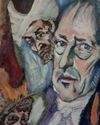
The Mirror & the Flame
Rebwar Fatah imagines Attar's & Hegel's shared path.
4 mins
April/May 2025
Philosophy Now
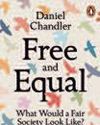
Free and Equal by Daniel Chandler
DANIEL CHANDLER, AN economist and philosopher based at the London School of Economics, begins Free and Equal: What Would a Fair Society Look Like? (2023) by asking an intriguing question. How is it, he wonders, that the most influential political philosopher of the last century has had almost no practical impact on politics or policy? The philosopher in question is John Rawls, whose magnum opus was A Theory of Justice (1971).
5 mins
April/May 2025
Listen
Translate
Change font size