試す 金 - 無料
Don Quixote & Narrative Identity
Philosophy Now
|April / May 2024
Inés Pereira Rodrigues asks, are we always or ever) who we Say we are?

At some point in life, I venture to guess, we’ve all had suspicions about who someone claimed to be, being unconvinced by their story. There would have been something about how they presented themselves or the situation they were telling us about that was just not believable. Or perhaps we’ve watched, disconcerted, as someone we know well claimed to be the kind of person we’re quite sure they’re not.
The theory of ‘narrative identity’ tries to answer the question of how persons maintain their identity through time. It proposes that who we are is constituted by or formed from the stories we tell about ourselves. We make sense of the events and occurrences in our lives through story-telling, by weaving them into a coherent narrative, making ourselves the protagonists and assigning some supporting roles, and many extras. We make sense of who we are by telling this story to ourselves: our sense of self emerges – or so says French philosopher and literary critic Paul Ricoeur (1913-2005) in his 1992 book Oneself as Another. Among other things, it would mean that who we are, our identity, is not already given: we are not already essentially determined as being this or that person, as if our identity were a substantial core fully formed at (or before) birth that remained the same as we change through our lives in more superficial ways. Instead, it means that who we are is a continuous work of self-interpretation, which we both make and discover through these stories. This work of becoming is ongoing through our self-story-telling.
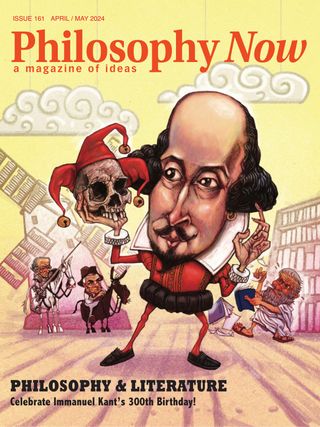

このストーリーは、Philosophy Now の April / May 2024 版からのものです。
Magzter GOLD を購読すると、厳選された何千ものプレミアム記事や、10,000 以上の雑誌や新聞にアクセスできます。
すでに購読者ですか? サインイン
Philosophy Now からのその他のストーリー

Philosophy Now
Bilbo Theorizes About Wellbeing
Eric Comerford overhears Bilbo and Gandalf discussing happiness.

9 mins
December 2025 / January 2026

Philosophy Now
What Women?
Marcia Yudkin remembers almost choking at Cornell
11 mins
December 2025 / January 2026

Philosophy Now
Islamic Philosophers On Tyranny
Amir Ali Maleki looks at tyranny from an Islamic perspective.
4 mins
December 2025 / January 2026

Philosophy Now
Peter Singer
The controversial Australian philosopher defends the right to choose to die on utilitarian grounds
5 mins
December 2025 / January 2026

Philosophy Now
Another Conversation with Martin Heidegger?
Raymond Tallis talks about communication problems.
7 mins
December 2025 / January 2026

Philosophy Now
Letters
When inspiration strikes, don't bottle it up. Email me at rick.lewis@philosophynow.org Keep them short and keep them coming!
17 mins
December 2025 / January 2026

Philosophy Now
The Philosophy of William Blake
Mark Vernon looks at the imaginative thinking of an imaginative artist.
9 mins
December 2025 / January 2026

Philosophy Now
Philosophical Haiku
Peering through life’s lens God in nature is deduced: The joy of being.
1 mins
December 2025 / January 2026

Philosophy Now
Philosophy Shorts
More songs about Buildings and Food' was the title of a 1978 album by the rock band Talking Heads. It was about all the things rock stars normally don't sing about. Pop songs are usually about variations on the theme of love; tracks like Rose Royce's 1976 hit 'Car Wash' are the exception. Philosophers, likewise, tend to have a narrow focus on epistemology, metaphysics and trifles like the meaning of life. But occasionally great minds stray from their turf and write about other matters, for example buildings (Martin Heidegger), food (Hobbes), tomato juice (Robert Nozick), and the weather (Lucretius and Aristotle). This series of Shorts is about these unfamiliar themes; about the things philosophers also write about.
2 mins
December 2025 / January 2026

Philosophy Now
Hedonic Treadmills in the Vale of Tears
Michael Gracey looks at how philosophers have pursued happiness.
8 mins
December 2025 / January 2026
Listen
Translate
Change font size