
Magzter GOLDで無制限に
10,000以上の雑誌、新聞、プレミアム記事に無制限にアクセスできます。
試す 金 - 無料
Through Hardship To The Stars
BBC Focus - Science & Technology
|June 2021
‘Per aspera ad astra’. This is the phrase adopted as a statement of intent by space agencies, both real and fictional, that originates in Virgil’s Aeneid. But exactly what kinds of hardship will the human body have to endure to colonise the cosmos? Prof Christopher E Mason has been studying astronauts’ reactions to life in space and reveals to Ian Taylor how we might adapt to overcome the challenges we face

When Scott Kelly came back to Earth after 340 days in space, it felt like his skin was on fire. Not on re-entry, but later, when he tried to sit down, get dressed, or move. Spending close to a year in microgravity will do that to you; aboard the International Space Station (ISS), Kelly’s skin got used to feeling no weight and having nothing touching it.
Like other astronauts, he floated around the ISS with little need for furniture. He didn’t wear shoes and even his clothes drifted around his body instead of hanging from it. So when he came home, a shirt sleeve bearing down on his arm under the pull of Earth’s gravity was alien, painful even. As Kelly himself said in a post-flight press conference: “Adjusting to space is easier than adjusting to Earth…”
Since the year-long mission ended in 2016, Kelly has become a guinea pig for scientists studying what happens to the human body when it ventures beyond Earth’s atmosphere. Even among astronauts, he’s a rare case. Not only did he spend the best part of a year in orbit, but Kelly has an identical twin brother, Mark. It gave NASA an unprecedented opportunity to study the physiological, molecular, and cognitive effects of long-term spaceflight.
Scott went to space. Mark, the perfect control subject, stayed on Earth. The brothers are both retired astronauts now, but their contributions to the landmark Twins Study continue and have produced a wealth of information about how space affects the heart, the microbiome, the immune system, and more.
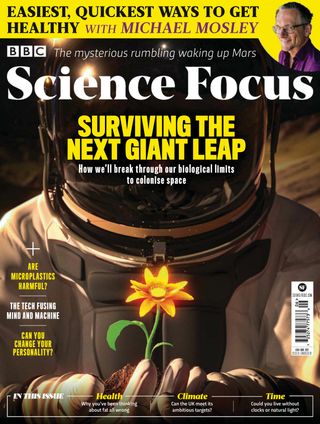

このストーリーは、BBC Focus - Science & Technology の June 2021 版からのものです。
Magzter GOLD を購読すると、厳選された何千ものプレミアム記事や、10,000 以上の雑誌や新聞にアクセスできます。
すでに購読者ですか? サインイン
BBC Focus - Science & Technology からのその他のストーリー

BBC Science Focus
ARE PSYCHOPATHS REALLY THAT GOOD AT LYING?
Picture infamous psychopaths from fiction, such as the eerily cold and calculating Patrick Bateman in the film adaptation of American Psycho, and they certainly seem like master deceivers. But what about real-life psychopaths? Research confirms that psychopaths are more inclined to lie to get what they want, and that they typically display a striking fearlessness - as if they have ice running through their veins.

1 min
January 2026
BBC Science Focus
WHY DO WE HAVE TWO OF SOME ORGANS, BUT ONLY ONE OF OTHERS?
The majority of animals on Earth, humans included, are bilaterally symmetrical. It means we can be divided roughly into two mirror-image sides. Evolutionary biologists believe that it has been like that for at least 300 million years, and because life organised this way survived, so did symmetrical design. Hence, two eyes, two ears, two lungs and two kidneys.
1 min
January 2026

BBC Science Focus
WHY DO CATS PREFER TO SLEEP ON THEIR LEFT?
I've said it before, and I'll keep saying it again and again and again: who knows why cats do anything?
1 min
January 2026

BBC Science Focus
FORGET COUNTING CALORIES TRY THIS INSTEAD...
Calorie counting isn't just difficult, it's riddled with problems that make it practically useless for anyone trying to lose weight.But there are alternatives
9 mins
January 2026

BBC Science Focus
SIGNS OF LIFE
The more planets we find outside our Solar System, the better our chances are of finding life on one of them. But if there really is life out there, how do we spot it?
8 mins
January 2026
BBC Science Focus
WHAT ACTUALLY MAKES SOMEBODY COOL?
Most of us have probably wanted to be cool at some point in our lives, and these efforts can have a big influence on the things we buy, the way we dress, the hobbies we invest in, the people we look up to and even the words we use.
2 mins
January 2026

BBC Science Focus
It's TIME to WAKE UP and SMELL the roses
What if the pursuit of happiness in the traditional sense – chasing wealth or power – is the very thing stopping you from being happy? Researchers are beginning to understand that spending time enjoying the simple things might be the secret ingredient to enjoying a happy, healthy life
8 mins
January 2026
BBC Science Focus
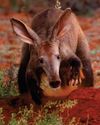
THE AARDVARK
In a time when people are being asked to consider eating insects, we should, perhaps, learn a thing or two from the aardvark (Orycteropus afer), Africa’s ant-guzzling gourmand. On an average night, the big-schnozzed mammal devours up to 50,000 of the crunchy critters.
2 mins
January 2026
BBC Science Focus
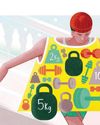
ADD WEIGHT TO LOSE WEIGHT
A very basic kind of wearable could make your New-Year-weight-loss plans stick
3 mins
January 2026
BBC Science Focus
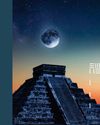
AHEAD OF THEIR TIME
The Maya civilisation is known for its art and architecture.
8 mins
January 2026
Translate
Change font size