Prøve GULL - Gratis
THE FRIENDSHIP CHALLENGE
The New Yorker
|February 12 -19, 2024 (Double Issue)
How envy destroyed the perfect connection between two teen-age girls.

“I don’t really know how competitive I am by nature, because if you can’t consciously acknowledge something you can’t see where you are in relation to it.” I wrote this sentence to an acquaintance with whom I was having a long e-mail exchange about Elena Ferrante’s novel “My Brilliant Friend,” which follows the early phase of an intense, lifelong, and highly competitive relationship between two Neapolitan girls in postwar Italy. Like a lot of things one dashes off in e-mails, the sentence isn’t strictly true: I can acknowledge when I’m competitive, particularly in a professional situation—but the acknowledgment is muffled, half suppressed. The competitiveness always takes me by surprise, coming, for example, in the form of a sudden sneaky urge to best someone in a minor contest that means very little. Upon “winning” in such situations, I feel a satisfaction that embarrasses me, or sometimes remorse; upon losing, a petty bitterness that is also embarrassing. Either way, I generally don’t let myself experience the feelings for long.
And those are the clear-cut situations, meaning they’re subject to some sort of professional metric—say, critical reception or audience response at a reading. In spite of my discomfort, I think that competition in such situations is natural, probably an unavoidable fact of life. Maybe it’s even good for you! But Ferrante’s novel, the first in a series, describes something far more intimate, complex, and, to me, disturbing. Reading it, I was reminded of a line I heard many years ago, perhaps on a radio show, that struck me with memorable force: “Men compete about what they do; women compete about what they
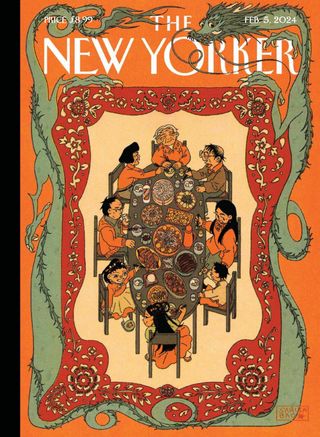

Denne historien er fra February 12 -19, 2024 (Double Issue)-utgaven av The New Yorker.
Abonner på Magzter GOLD for å få tilgang til tusenvis av kuraterte premiumhistorier og over 9000 magasiner og aviser.
Allerede abonnent? Logg på
FLERE HISTORIER FRA The New Yorker

The New Yorker
MR. MICROCOSM
Getting to grips with Goethe.

16 mins
December 08, 2025

The New Yorker
UNDER COVER
\"The Secret Agent.\"
6 mins
December 08, 2025

The New Yorker
ONLY FANS
The stadium goes luxe.
29 mins
December 08, 2025

The New Yorker
SKIPPING CLASS
How a high-born rebel girl came to take up the cause of the commoner.
13 mins
December 08, 2025

The New Yorker
IBSEN ON THE BEACH
In Spain, Francisco Coll turns \"An Enemy of the People\" into an opera.
5 mins
December 08, 2025

The New Yorker
A FURTHER SHORE
Doing battle with my blood.
13 mins
December 08, 2025

The New Yorker
SAFETY
Dictators like to move people around.
26 mins
December 08, 2025

The New Yorker
IN THE LINE OF FIRE
How do politicians respond to political violence?
30 mins
December 08, 2025

The New Yorker
VALLEY OF BABEL
Reformers tried to standardize a tiny language. Then the shouting started.
20 mins
December 08, 2025
The New Yorker
THE LOUNGE WARS
At the airport, what's the difference between out there and in here?
17 mins
December 01, 2025
Listen
Translate
Change font size